Islands
Murano, Burano and Torcello by private boat
Glass, lace and the quiet end of the lagoon
The lagoon is not the surroundings of Venice. It is where Venice came from. The city began on these islands, and they still hold trades that the historic centre lost to souvenir retail long ago. The difference between the public vaporetto and a private boat is not comfort. It is how much you reach, and where you are let in.
Programme
- Murano and fire Glassmaking was moved here by decree at the end of the thirteenth century, because of the fire risk in a densely built city. The masters were effectively confined to the island: the secrets were not to leave. We watch work at the furnace and go through the techniques — murrine, filigrana, sommerso — and why handwork is never perfectly symmetrical.
- Telling real glass from fake The consortium mark, the pontil scar on the base, weight and price. Shown on objects in your hands rather than described, after which the shops around Rialto lose their appeal.
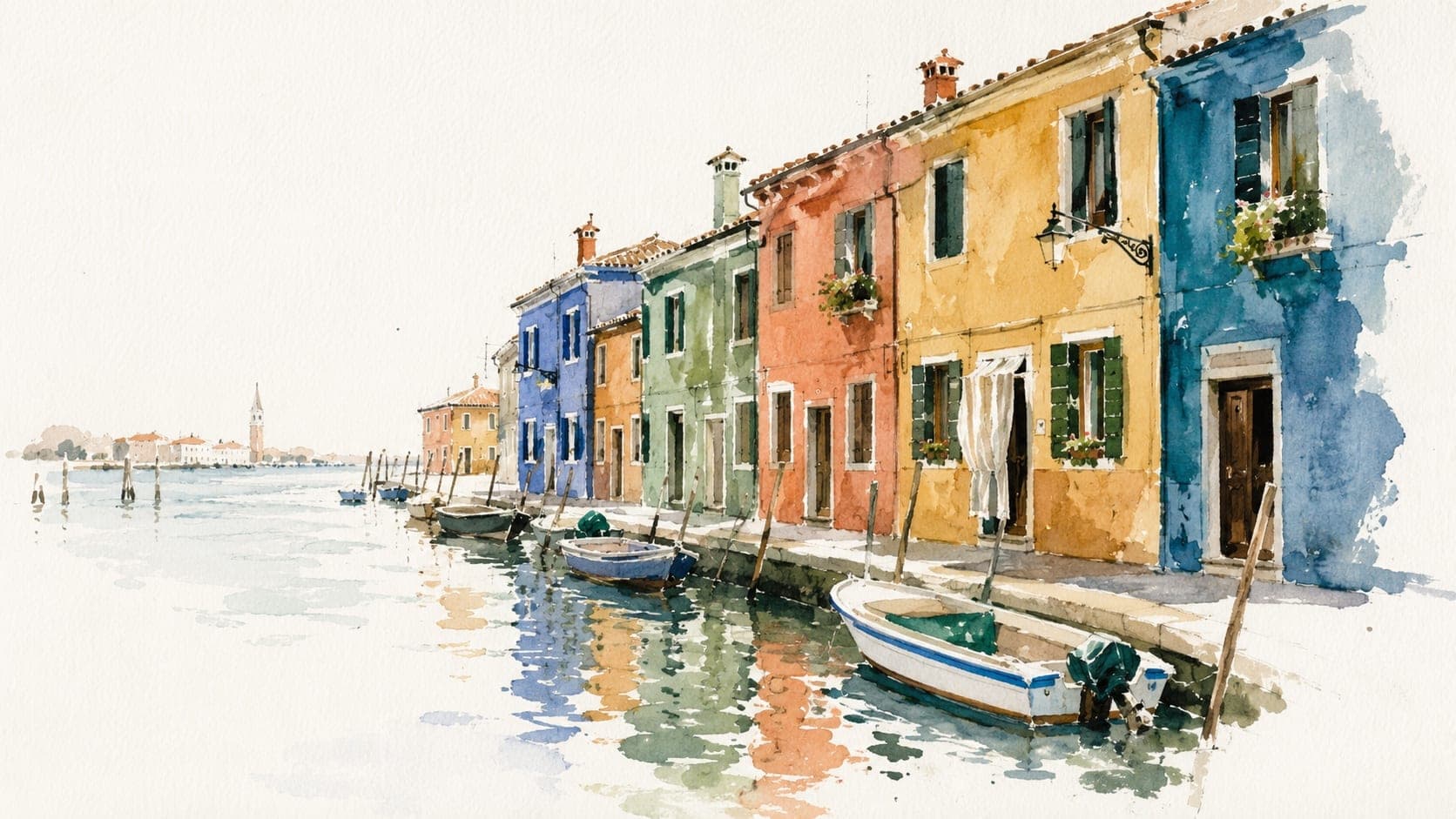
- Burano and colour A fishermen’s island where the houses were painted in strong colours to be told apart from the water in fog. And the lace tradition: how handmade differs from machined, and why the real thing costs what a piece of jewellery costs.
- Torcello, on the longer route The first settlement of the lagoon, later abandoned to malaria and silt. The cathedral of Santa Maria Assunta holds Byzantine mosaics of the eleventh and twelfth centuries, including a Last Judgement across the whole west wall. A handful of people live here now, and it is the quietest place in the lagoon.
On Burano we pick up bussolà, the ring-shaped biscuits the bakers made for fishermen because they kept at sea.
Route
- Murano and fire Glassmaking was moved here by decree at the end of the thirteenth century because of the fire risk in a densely built city. The masters were in effect confined to the island: the secrets were not to leave. We watch work at the furnace and go through the techniques — murrine, filigrana, sommerso — and why a handmade object is never perfectly symmetrical.
- Telling real glass from fake The consortium mark, the pontil scar on the base, weight and price. Shown on objects in your hands rather than described, after which the shops around Rialto stop being a temptation.
- Burano and colour A fishermen’s island where the houses were painted in strong colours so they could be told apart from the water in fog. And the lace: how the handmade differs from the machined, and why the real thing is priced like jewellery.
- Torcello, on the longer route The first settlement of the lagoon, later abandoned to malaria and silting. Santa Maria Assunta holds Byzantine mosaics of the eleventh and twelfth centuries, including a Last Judgement across the whole west wall. A handful of people live here now, and it is the quietest place in the lagoon.
- The crossings Between the islands we pass abandoned monasteries and shallows marked out by bundles of piles. Views that no public route offers.
How this differs
The standard trip by vaporetto means waiting at landings, a fixed route, and a glass showroom that pays commission for the delivery of groups. On a private boat we run to our own schedule, enter a manufactory by arrangement rather than by allocation, and nobody takes a percentage of what you buy.
Not for you if
- If you are prone to seasickness — the crossings between islands run up to half an hour.
- If Murano alone is the aim, four hours is generous; we can discuss a shorter version.
- In a strong wind the lagoon closes to small craft and the itinerary moves.
When to go
| May to September | The best time on the water: warm, a calm lagoon, long daylight. |
|---|---|
| October to April | We run with the cabin closed. The manufactories work, there are fewer visitors and the light is softer. |
| Weekdays | Necessary. At weekends part of the workshops are shut and Burano fills by midday. |
What the price covers
- A licensed private guide
- A route built around your pace and interests
- A private launch with a boatman throughout
- A visit to a glass manufactory
Paid separately
- Lunch
- Purchases
- Admission on Torcello
The quoted price covers one to three guests. From four upwards, quoted on request.
Practical notes
- Length
- Four hours for the classic route, up to eight for the longer one
- Transport
- A private launch, not the public vaporetto
- Lunch
- Can be added on Burano or in a walled garden; arranged on request
Frequently asked
How long does it take?
Four hours covers Murano and Burano without hurry. Adding Torcello and lunch takes it to eight.
What do we travel on?
A private launch. The public vaporetto is not part of the route.
Can I buy glass and take it home?
Yes. Contemporary pieces leave Italy freely and the manufactories arrange packing and worldwide shipping. Restrictions apply only to antiques over fifty years old.
Can we do all three islands in four hours?
No. Four hours is Murano and Burano. Torcello needs the longer route.
Is it suitable for children?
Yes. The furnace is the strongest impression Venice offers a child.
Why is a private boat better than the vaporetto?
Time. On public transport the travelling and waiting alone take about two hours out of four. And we enter workshops by arrangement rather than showrooms that work on group traffic.
Is lunch included?
No, but it can be added — on Burano or in a walled garden. Booked in advance, and the bill settled separately.
What are bussolà?
Ring-shaped biscuits from Burano that the bakers made for fishermen because they kept at sea. We pick some up.
Can the order of islands be changed?
Yes. Tides and the furnaces’ hours sometimes make one order better than another; I set it the evening before.
Available dates and a quote for your party — in reply to a short message.
Get in touchOther tours in Venice
Venice artisan workshops: a private studio tour
Closed studios, and the people who have kept the trades alive
Grand Canal tour by private boat
The formal face of Venice, seen the way it was meant to be seen
A full private day in Venice, arranged end to end
Logistics, access and pace, with nothing left to chance