St Mark's Basilica After Hours: The Venice Only a Few Ever See
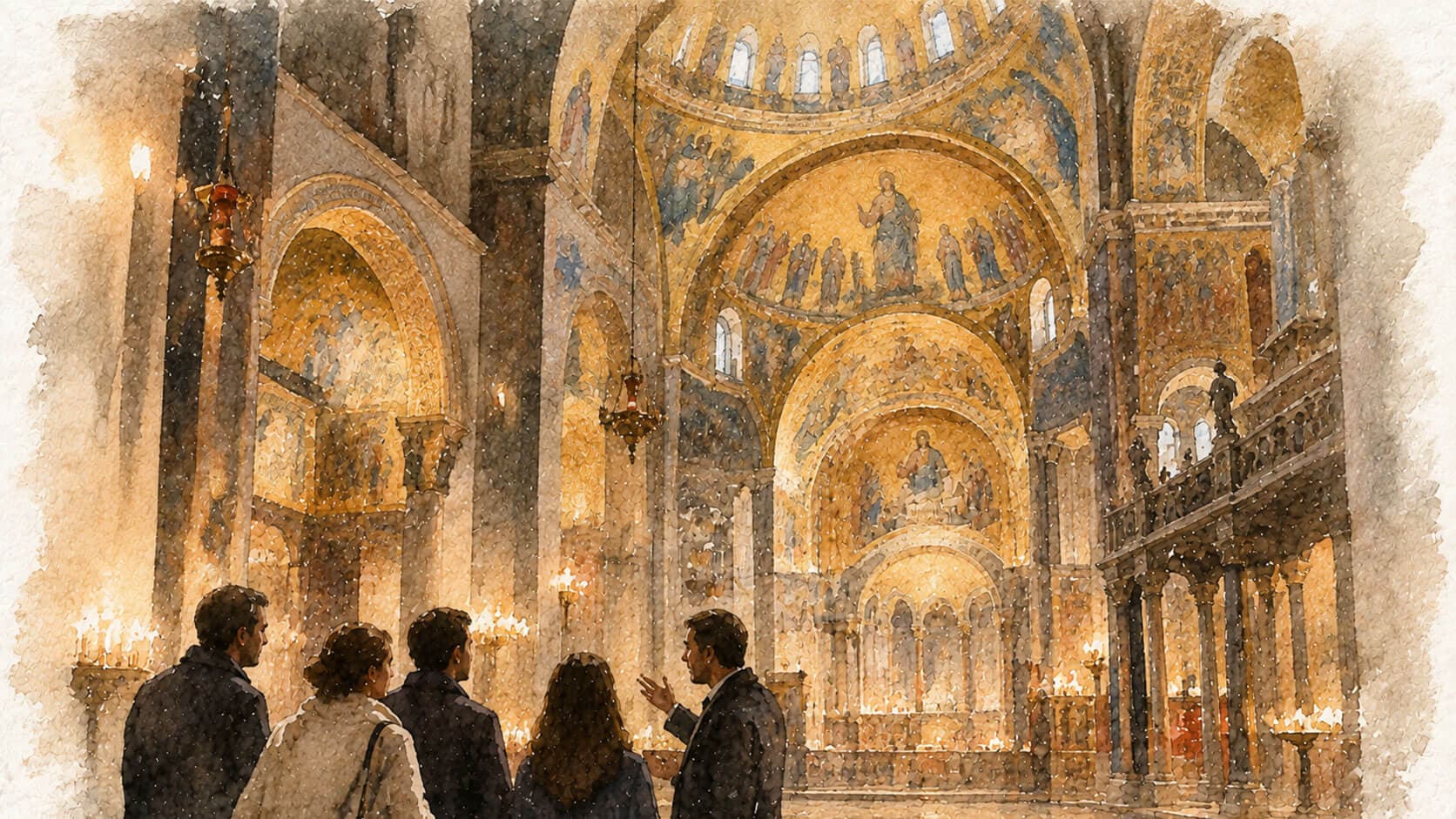
By day, St Mark's is a queue, a gloom and a current of thousands that carries you past the very thing you came for. In the evening, once the doors close to the public, the same basilica becomes another place — quiet, lit on purpose, yours. Here's what you see in St Mark's after hours, the rare things hidden inside it, and how one actually gets in.
Why you don't really see St Mark's by day
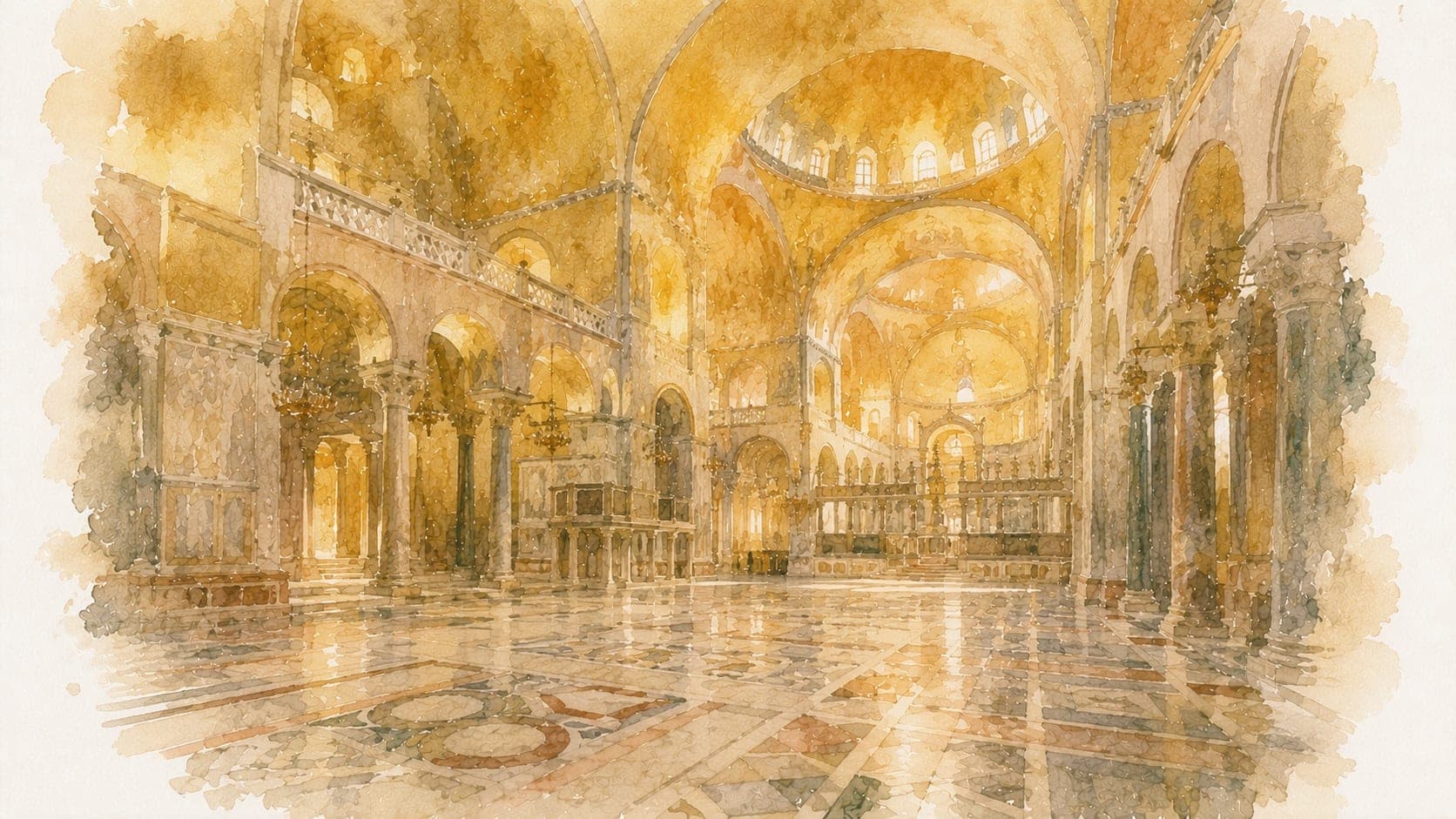
The basilica was designed dark. The logic is Byzantine: the light comes not from windows but from gold. Around four thousand square metres of gold mosaic, laid over eight centuries, gather light and release it in points — when a beam strikes at the right angle. By day, in the crowd and the flat ambient light, that gold reads as brown dusk, and most visitors leave without ever seeing what they came for. In the evening, under directed light, the domes catch fire — and the "Church of Gold", the Chiesa d'Oro, is finally golden.
The Pala d'Oro: a golden altar like no other
Behind the high altar stands a thing people glance at for thirty seconds in the daytime crush and that deserves an hour. The Pala d'Oro — a golden altarpiece assembled from 187 Byzantine enamels and nearly two thousand gemstones: pearls, emeralds, sapphires, garnets, amethysts, rubies (the exact composition is given differently in different accounts, and the stones have been changed more than once over the centuries). Not a single diamond — the Middle Ages prized colour, not sparkle. The first version dates to 976, and in its present form it is the result of reworkings across the twelfth to fourteenth centuries; some enamels are loot from the Fourth Crusade, which sacked Constantinople in 1204. Some of the stones are said to have been prised out by Napoleon's soldiers in 1797, and the city replaced them in the nineteenth century. In the evening, with no queue at your back, you see not a "gold panel" but a map of the heavenly Jerusalem.
The horses stolen twice
Above the entrance stand four horses of gilded copper. They are loot from the Fourth Crusade of 1204, carried off from Constantinople (where, by one account, they too had arrived from elsewhere). The originals were long ago moved inside to the museum and replicas set outside. In 1797 Napoleon took the horses to Paris; they returned in 1815. War booty twice over.
An apostle's body under the altar
Beneath the high altar, by tradition, lie the relics of St Mark — the reason the basilica exists at all. The legend runs that Venetian merchants smuggled them out of Alexandria in 828, hidden in barrels of pork the Muslim guards would not inspect. True or not, the whole basilica is built as a golden reliquary around the relic — paid for by a trading empire.
What "after hours" means
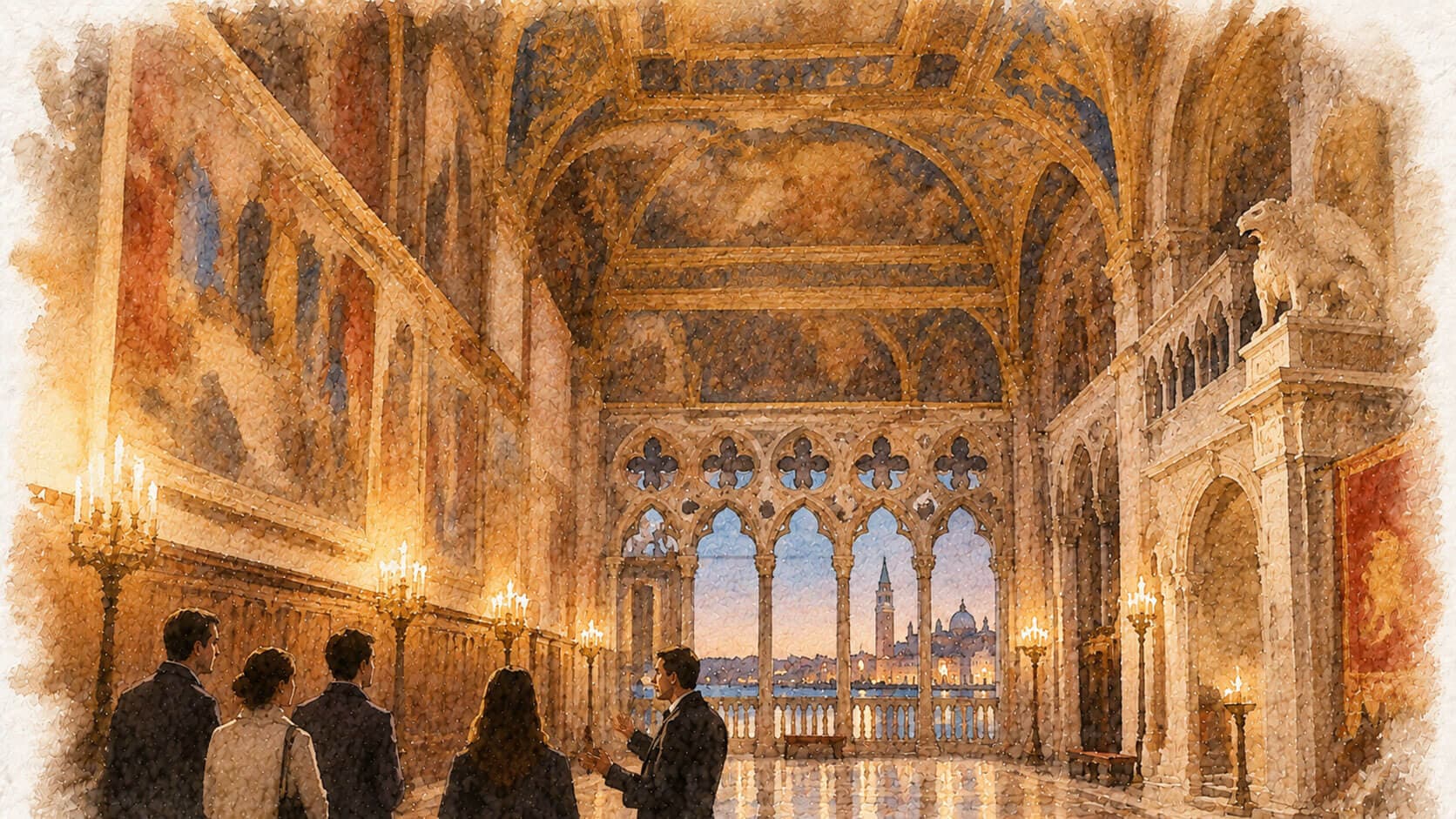
The public is cleared from St Mark's in the evening — and only then is the other format possible. A private visit outside opening hours isn't "a more expensive ticket". It's access arranged separately: the basilica without the current, light aimed where it matters, time to stand where by day you're hurried on. Such a visit is agreed in advance, and it is worth the single evening you came for.
How we do it
We run a private visit to St Mark's after hours — the gold of the mosaics and the Pala d'Oro without the crowd, with an art historian, in Russian or English; access is arranged in advance. The dark, powerful side of the same square is opened by the Doge's Palace after dark.
Frequently asked
Can you visit St Mark's Basilica after hours?
Yes, privately and by arrangement. It's a separate format outside opening hours — the basilica without the crowd and with directed light, not a standard ticket.
What can you see in St Mark's in the evening that you can't by day?
The gold of the mosaics and the Pala d'Oro "come alive" under directed light. By day, in the flat ambient light and the crowd, they read as dark dusk.
How much is a private after-hours visit to St Mark's?
Priced on request — this is individual access, not a mass ticket; it depends on the format and the date.
Do you need a guide?
Yes. An evening visit loses half its point without someone to show you what to look at: the Pala d'Oro, the Ascension dome, the crypt, the treasury.
What should I wear?
The basilica is a working church: shoulders and knees must be covered. More on the entry rules in our visitor guide.
What language?
Russian and Italian fluently; English on advance request.
St Mark's was built as a machine that turns a trading empire's gold into light. By day the machine is muffled by the crowd. In the evening it works — but only for those the doors are opened for. If you'd like to see the basilica like that, write to us.