The Doge's Palace After Dark: Secret Itineraries and the Dark Side of Power
The Doge's Palace is the single building where, for a thousand years, a parliament, a supreme court, a secret police, a prison and a ruler's bedroom all fitted under one roof. By day a current flows through it. But the palace's real story isn't in the golden halls — it's behind them: in rooms a standard ticket won't open, and on routes revealed only in private. Here's what the Doge's Palace hides, and how to see its darker side.
A building with no separation of powers
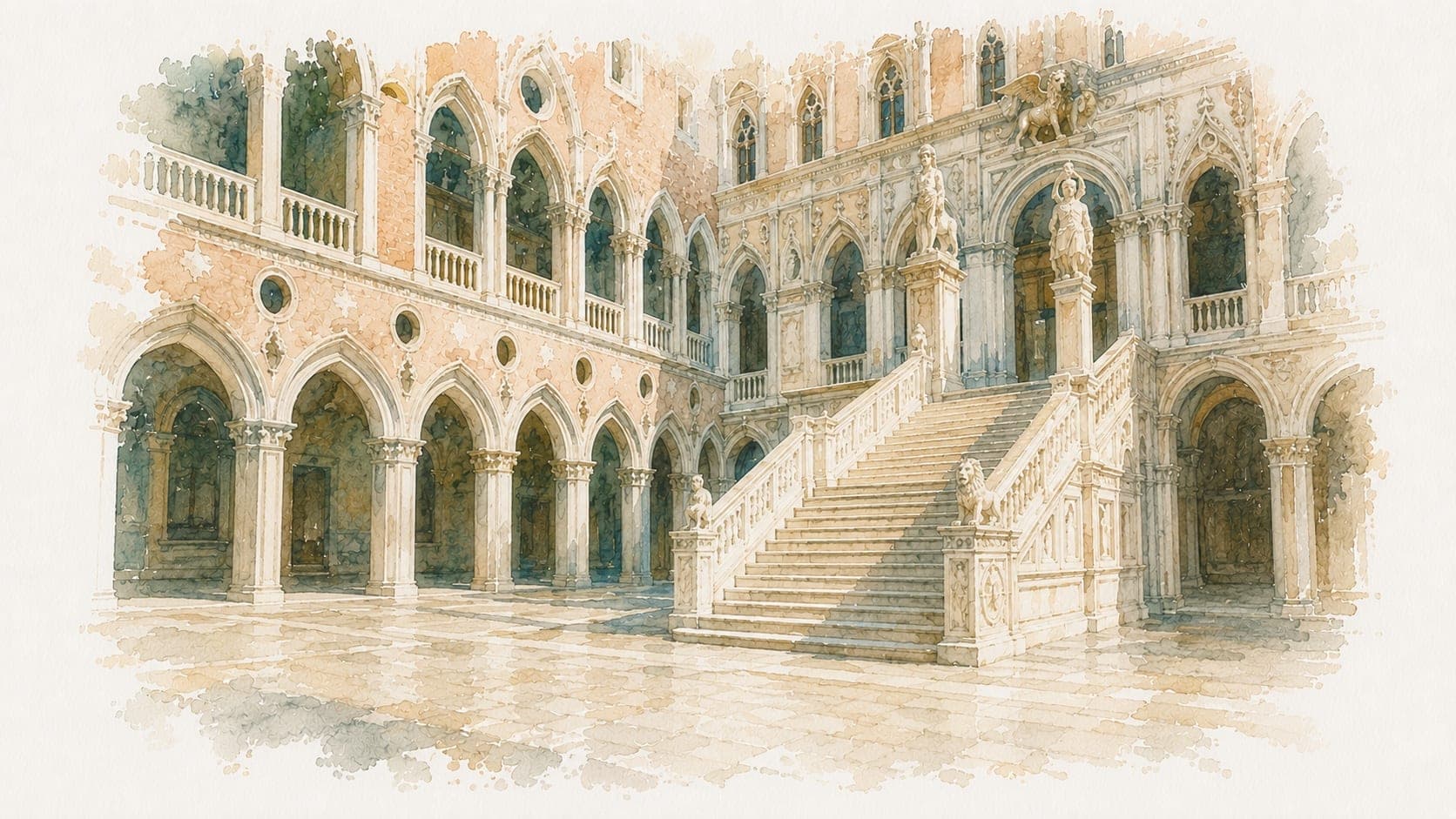
Venice fitted an entire state into one palace: the Great Council met a floor above the cells holding men accused of treason. Parliament, court, secret police — the Council of Ten and the State Inquisitors — prison and the doge's residence, under one roof, with no walls between the branches. This isn't a museum of pretty rooms; it's the blueprint of how the Republic actually worked: some 120 doges across a thousand years, until its fall in 1797.
The hall where Paradise is the largest painting on earth
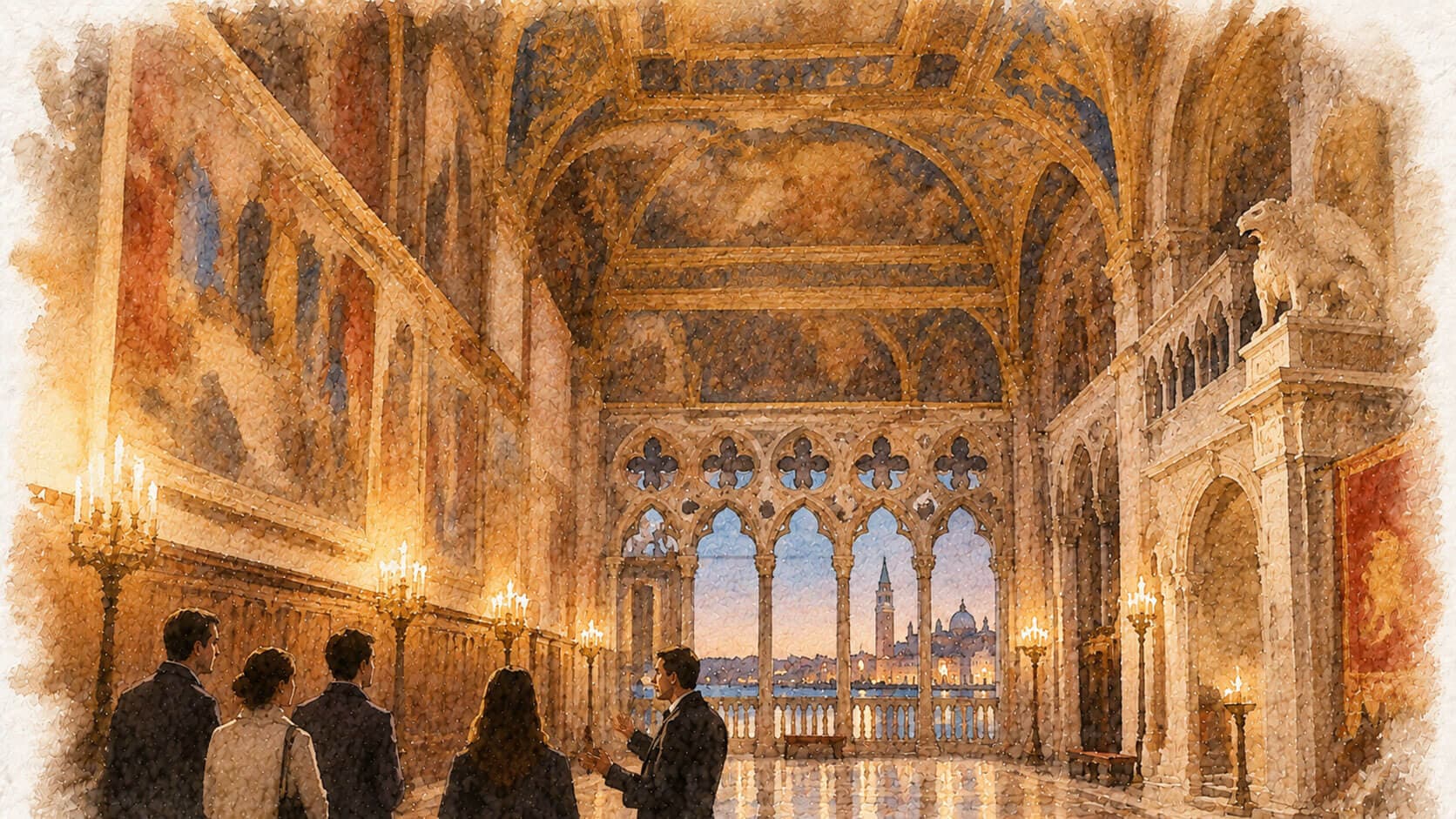
The heart of the palace is the Great Council Hall: about 53 metres long with not a single column, one of the largest column-free rooms in Europe, where up to two thousand nobles gathered. The entire far wall behind the doge's throne is taken by Tintoretto's Paradise — about 22 metres wide, one of the largest paintings on canvas in the world, with hundreds of figures. Along the top runs a frieze of 76 doges' portraits, and in one place, instead of a face, a black veil with a Latin inscription: "Here is the place of Marino Falier, beheaded for treason." A doge executed by his own state in 1355, erased from memory on the wall itself.
Secret Itineraries: what the ticket doesn't include
The standard ticket runs through the ceremonial halls. But behind them lies the administrative underside shown only on the Secret Itineraries (Itinerari Segreti): the chancellery where state secrets were kept, the room of the State Inquisitors (the secret service founded in 1539), the torture chamber. This is where the Republic really worked — quietly, without gold, without the public.
The Leads, and the escape Casanova called his life's greatest feat
Directly under the palace roof are the Piombi, the "Leads": cells beneath the lead roofing, baking in summer and freezing in winter. Below, at the waterline, the Pozzi, the "Wells", dank and dark. In 1755 Giacomo Casanova was thrown into the Leads — "for crimes against religion and decency". In 1756 he broke through his cell ceiling, crossed the palace roof by night and climbed out through a window into the ceremonial rooms. He left Venice the same night and is generally held to have been the only man to escape the Leads. He described the escape in detail in his memoirs and called it — not his love affairs — the greatest achievement of his life.
The Bridge of Sighs: the line between power and prison
An enclosed white-limestone bridge, built around 1600, links the palace to the New Prisons. Everything before it is government; everything after it is imprisonment. The name was coined by the Romantic poets, Byron among them, who imagined the sigh of the condemned taking a last look at Venice through two narrow stone lattices. It was the last thing a sentenced man saw — and almost nothing at all.
What "after hours" means
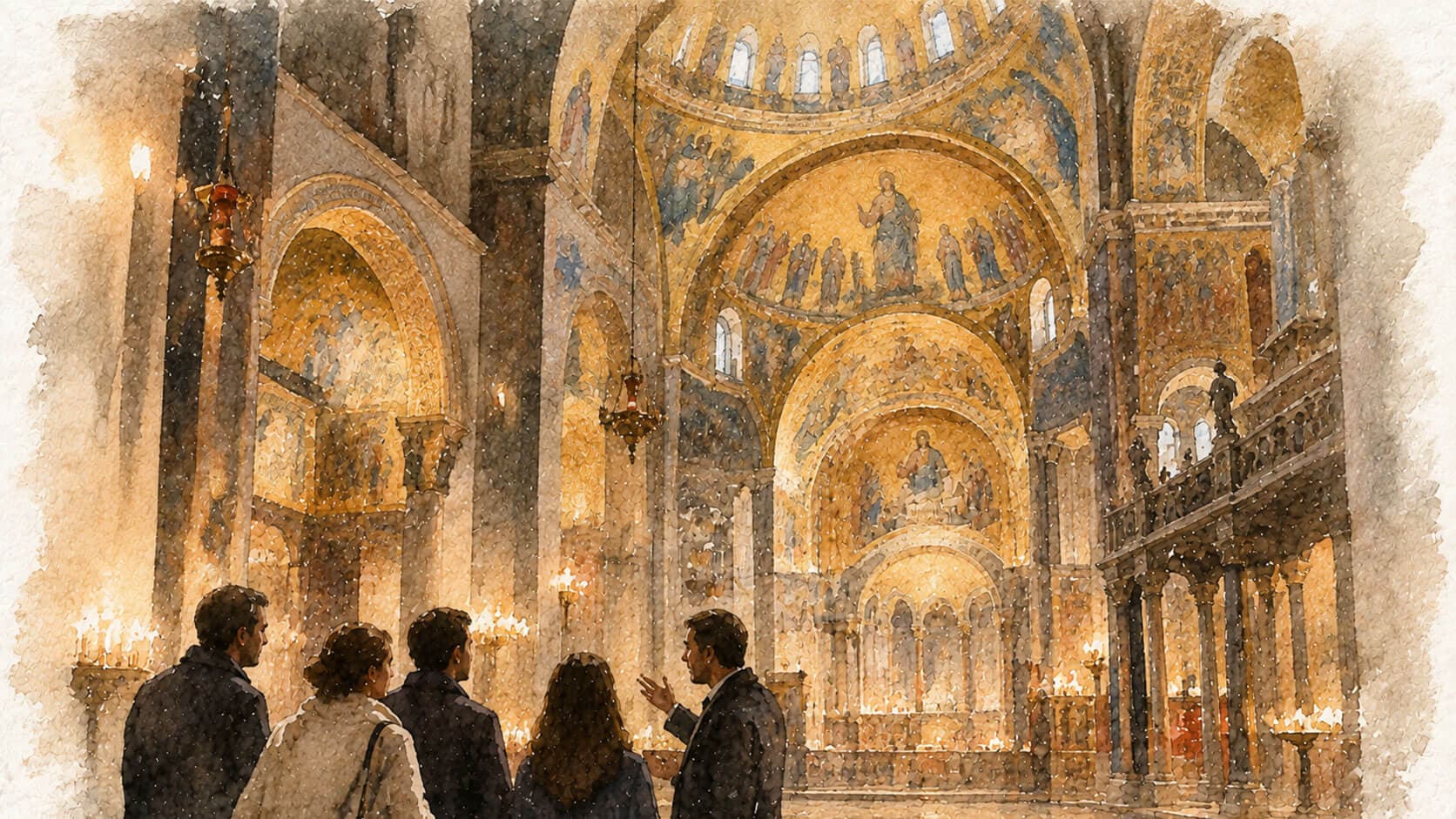
By day a current flows through these halls. A private visit after hours is another experience: power and its underside without the crowd, in the quiet, when the empty Great Council Hall sounds the way it was meant to. This is access arranged separately, not a pricier ticket.
How we do it
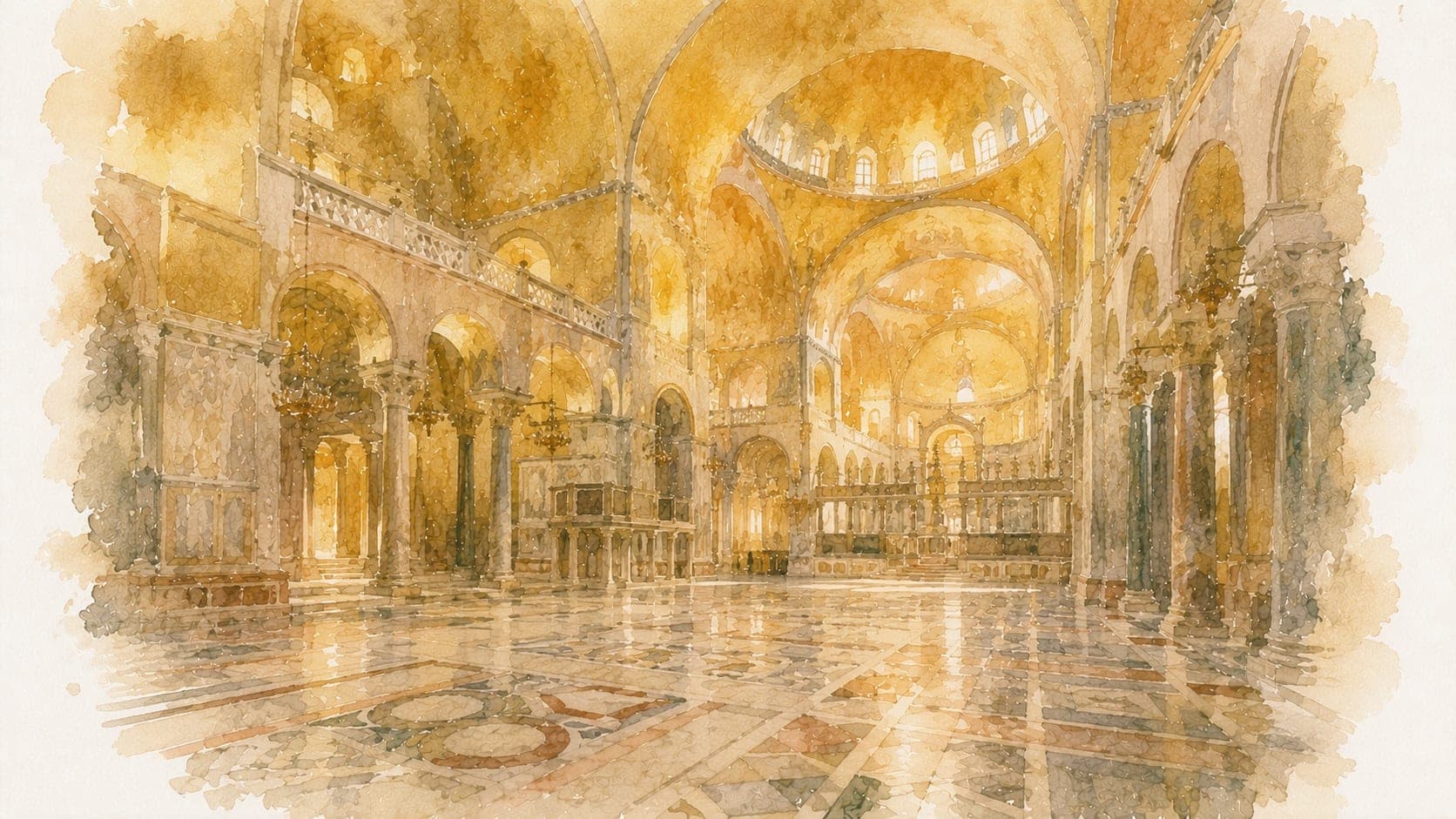
We run the daytime Doge's Palace without queues — a VIP tour of the palace: the halls of power, the Bridge of Sighs and the prisons with an art historian. A private after-hours visit and the secret itineraries are arranged individually — a private visit after hours. And the golden, ceremonial side of the same square is opened by St Mark's Basilica after hours.
Frequently asked
What are the Doge's Palace "secret itineraries"?
Access to rooms the standard ticket doesn't open: the chancellery, the Inquisitors' room, the torture chamber and the Piombi lead cells from which Casanova escaped.
Can you visit the Doge's Palace after hours or at night?
Yes, privately and by arrangement — an individual format outside opening hours, not a mass ticket.
Where was Casanova held, and how did he escape?
In the Piombi lead cells under the palace roof. In 1756 he broke through the ceiling, crossed the roof and climbed out through a window — the only escape from the Leads in the Republic's history.
What do you see on the secret itineraries that isn't on the standard ticket?
The administrative and "security" underside of the Republic: the torture chamber, the secret-service offices and the prison cells inside the palace itself.
How much is a private visit?
On request — this is individual access; it depends on the format and the date.
What language?
Russian and Italian fluently; English on advance request.
The Doge's Palace was built beautiful on the outside and ruthless within — so a guest would see the grandeur while a subject felt the power. By day only the grandeur remains. The dark side — the secret itineraries, the cells, the silence of empty halls — is seen by those for whom the doors are opened separately. Write to us if you'd like to be among them.