Venice Gondola Ride: Cost, Routes and How Not to Overpay
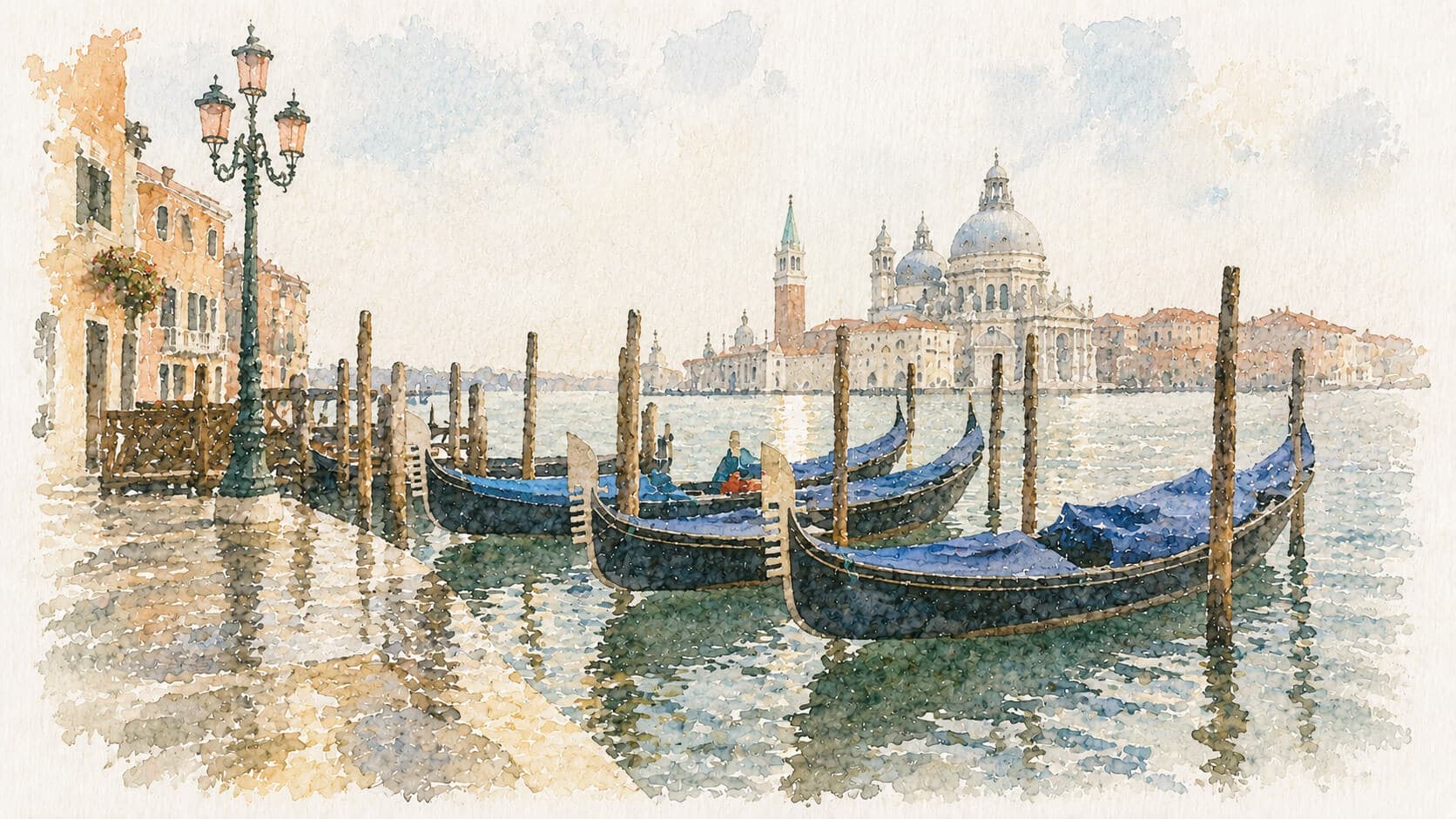
The gondola is the very image of Venice people come for. But between twenty minutes in a traffic jam of boats by St Mark's and a quiet canal where the only sound is the oar lies a gulf — and both cost the same. Here are the facts: what it costs by day and by evening, where to board so you don't sit in the jam, what the two-euro ferry-gondola is, and how not to pay €200 instead of €90.
In short: the essentials on the gondola
- The official fare
- The official fare (set by the city): €90 by day and €110 in the evening (from 7pm), for a ride of about 30 minutes.
- Price per boat
- The price is for the whole boat, up to 5 people, not per person. Five is the best value; six won't fit.
- Where you board
- Where you board matters more than who rows: from St Mark's the boats go in convoy on one loop; from the quiet stations, into narrow canals with no one around.
- The traghetto
- The traghetto is a ferry-gondola across the Grand Canal for about €2 — the cheapest way to stand in a gondola.
- Tickets from touts
- Tickets from touts and "shared" gondolas are a common scam; the official fare is fixed.
How much a gondola ride costs in Venice
The price is set not by the gondolier but by the city, and it's the same everywhere: €90 for a ride of about 30 minutes by day (9am to 7pm) and €110 in the evening (from 7pm). That's the price for the whole gondola, which holds up to five passengers — not per person. So for a couple it's €90 between two; for a party of five it's the same €90 between all of them, about €18 each.
You can extend the ride for a supplement (calculated by the time beyond 30 minutes). A serenade — a musician who rides with you or follows in a separate boat — isn't included and costs extra, usually €15–30, agreed in advance. Gondoliers generally take cash.
Day or evening: which to choose
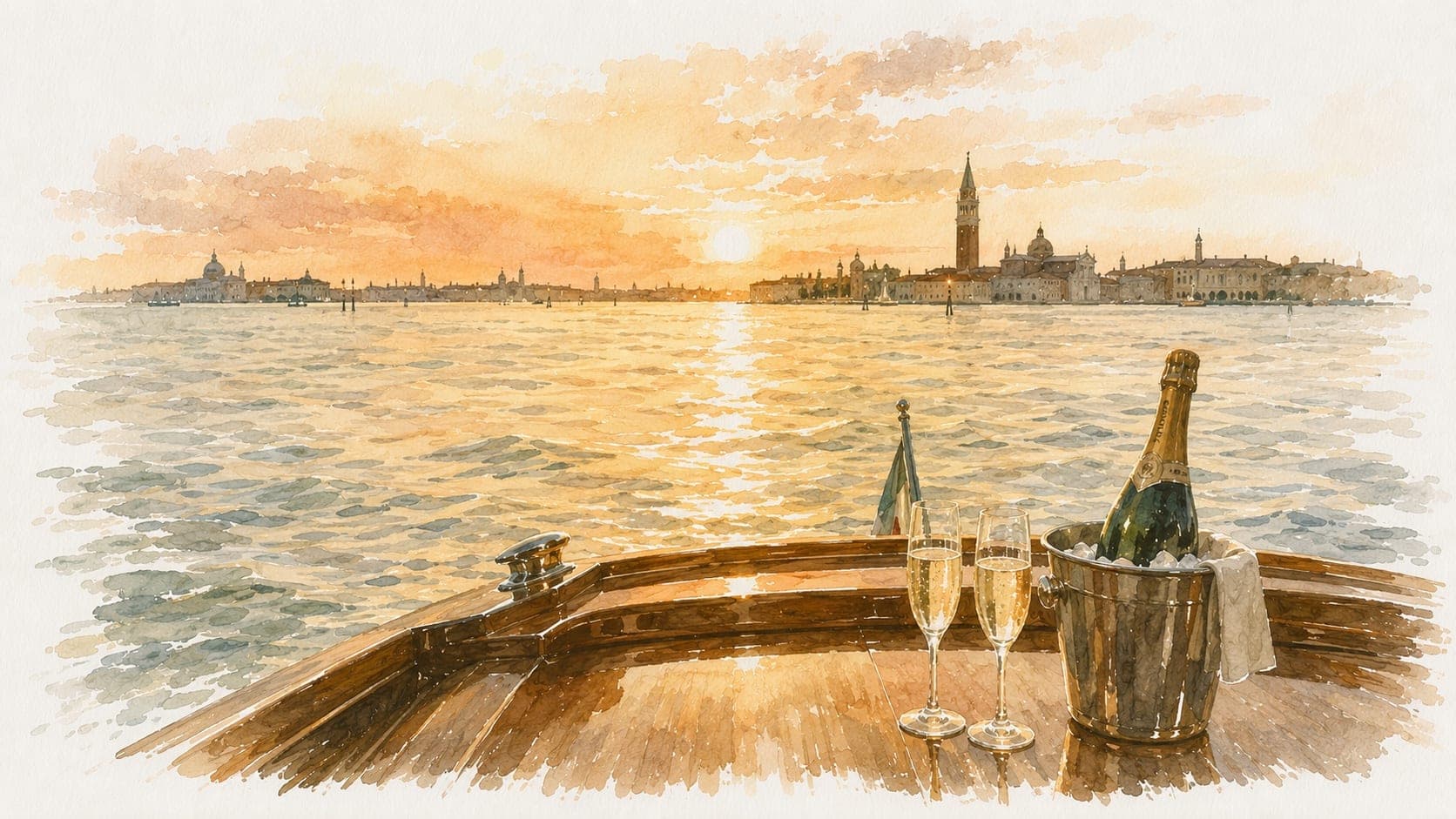
By day it's cheaper and lighter — you see the detail of the palazzi, the reflections, the washing on the lines. In the evening it's dearer (€110), but the canals empty, the water turns black, lights come on in the windows, and Venice becomes the one from the postcards. For romance the evening almost always wins; for photographs and a first visit, the day. The sweet spot is the hour before sunset: still light, but the crowds have thinned.
Where to board: crowded stations versus quiet ones
This is the main decision, and it matters more than the choice of gondolier. The fare is the same everywhere — what changes is the route and the queue.
| Station | Traffic | What it is like |
|---|---|---|
| Bacino Orseolo | crowded | the basin behind the north-west corner of St Mark's Square, the densest concentration of gondolas in the city. The boats leave in convoy and follow one loop through the same canals; in season, a queue. |
| The Rialto and the Riva degli Schiavoni waterfront (by the Danieli hotel) | crowded | postcard views, but very busy, and the water is shared with vaporetti. |
| The railway station (Ferrovia) and Piazzale Roma | crowded | handy if you have luggage, but the surrounding canals are busy with traffic. |
| San Tomà | quiet | in San Polo, by the Frari church: fewer boats, a shorter queue, the calmest water in the centre. |
| Santa Maria del Giglio | quiet | west of St Mark's, by the Gritti hotel: a quiet start, then out to the Salute and the view of San Giorgio. |
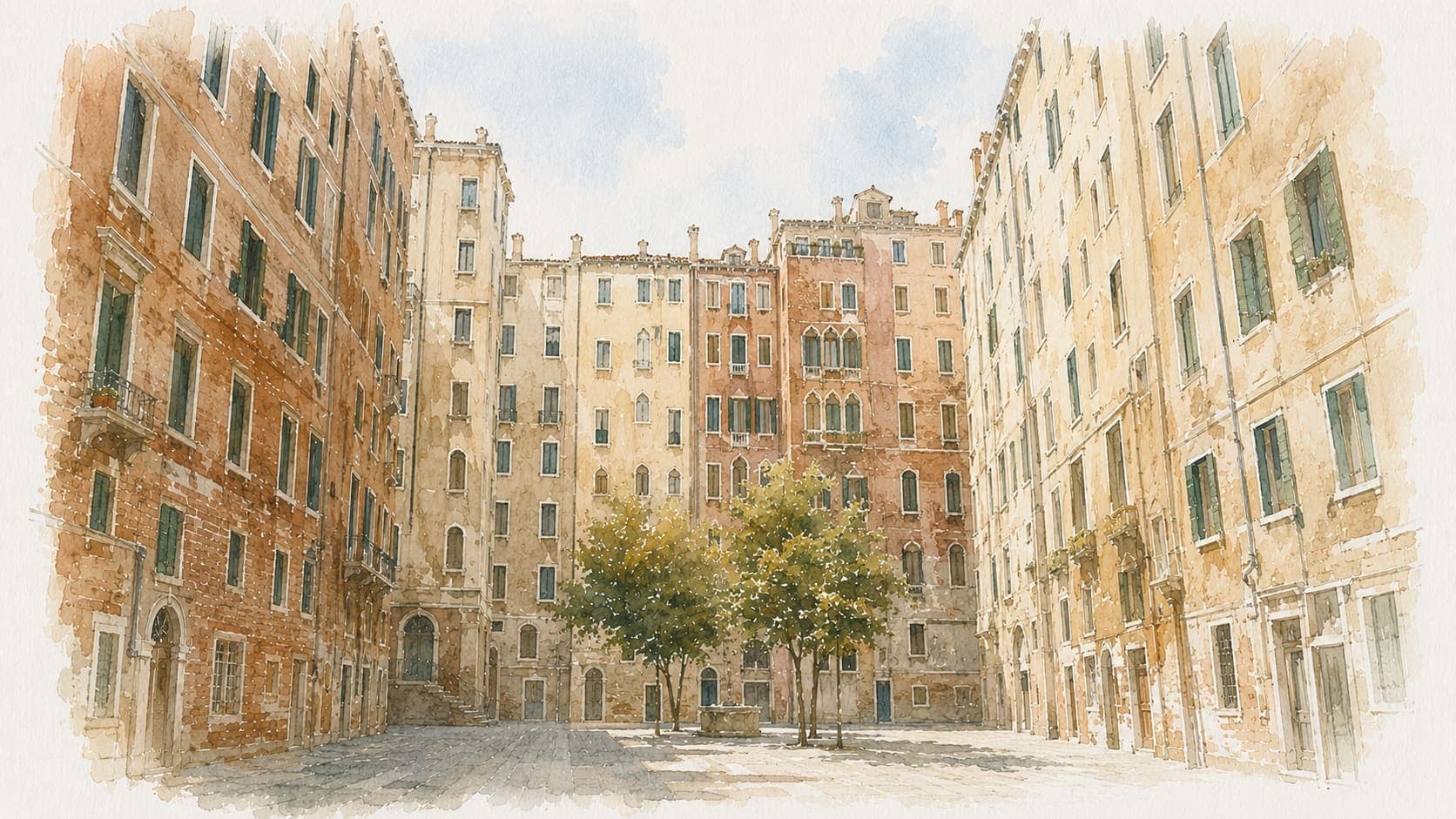
| San Moisè, Accademia (Dorsoduro), Campo San Barnaba, and the stand by the Jewish Ghetto in Cannaregio | quiet | narrow canals and everyday Venice without the tourist convoy. |
The rule is simple: walk a few minutes from St Mark's and, for the same money, you get quiet instead of a jam.
What you'll see: the routes
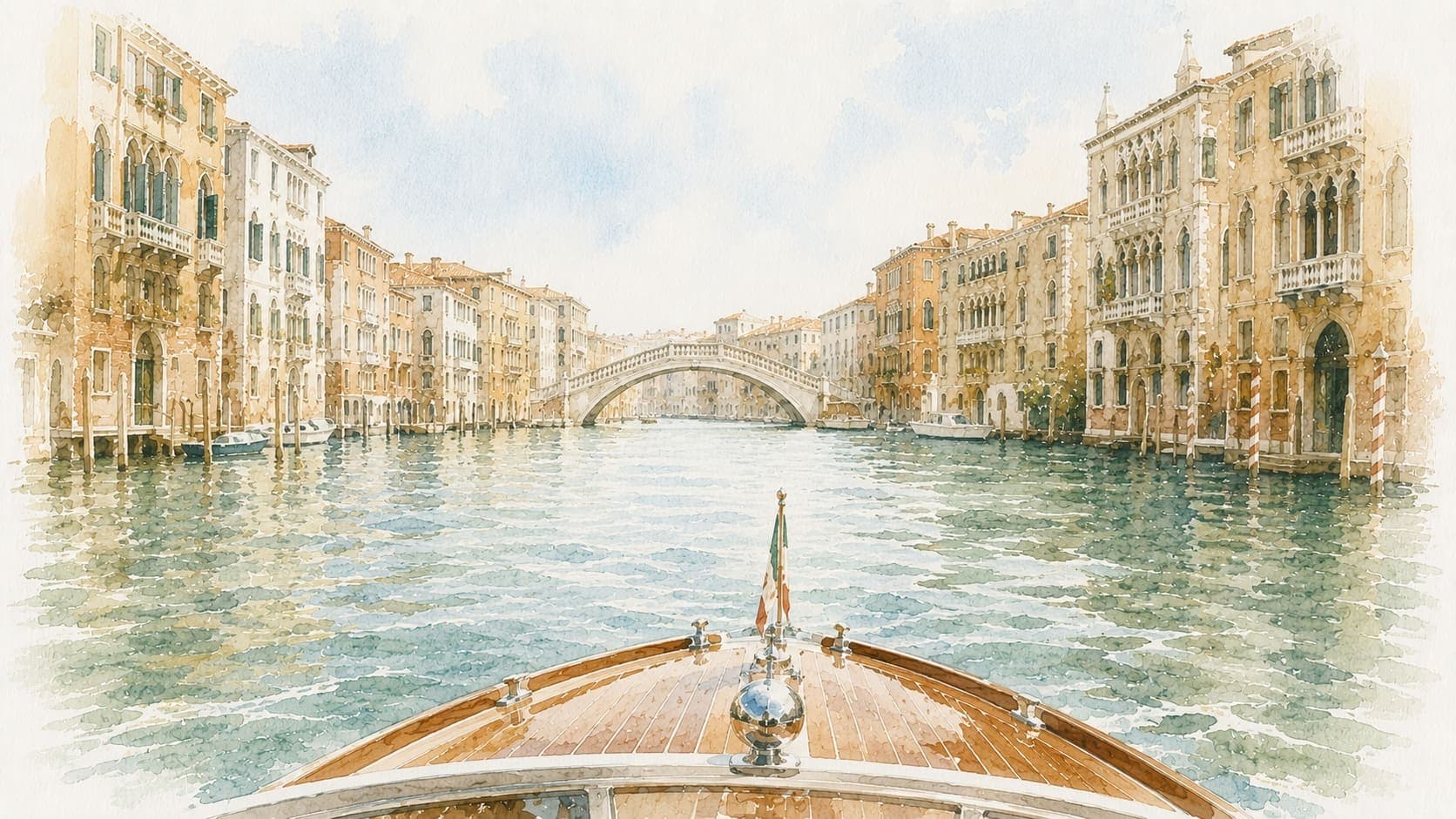
The route depends on the station, but in general it runs along the narrow inner canals (rii) rather than the Grand Canal (which is noisy and crowded with vaporetti). From San Tomà and Santa Maria del Giglio the ride leads into the quiet canals of San Polo and Dorsoduro and towards the Salute; from the stands by the Ghetto and in Cannaregio, into lived-in quarters where the washing hangs and ordinary Venice goes on. A short stretch of the Grand Canal is sometimes included — for the view of the palazzi and the Rialto — but the point of the ride is the quiet of the side canals.
The traghetto: a gondola for two euros
If a gondola as an attraction isn't in your plans but you'd still like to stand in one, there's the traghetto — a ferry-gondola that crosses the Grand Canal where there's no bridge. The service has run since the 13th century; the wide gondola is rowed by two gondoliers, carries up to fifteen people, and crosses in a couple of minutes — traditionally standing (most lines now also allow sitting). For a visitor it's about €2; for a resident, around 70 cents. Of the many lines there once were, about five remain: the most reliable are Santa Sofia opposite the Rialto fish market and San Tomà; the hours are posted at the landing (look for the yellow "traghetto" sign with a black gondola). It isn't a ride but a crossing — yet it's a real Venetian gondola for two euros, and it's how the locals cross the canal.
How not to get scammed
- The "shared gondola"
- The "shared gondola" from a tout. A middleman gathers five strangers into one boat: each pays less than €90, the gondolier gets his lawful €90, and the middleman pockets the difference. If you're offered "a seat in a gondola", that's it.
- Mark-ups and "extras"
- Mark-ups and "extras". Stories of €150 for 40 minutes or €180 for 45 with "extras" that push the bill to €200–250. The official fare is fixed — anything above €90/€110 for 30 minutes is agreed in advance and openly.
- Tickets from touts, booking far ahead
- Tickets from touts and booking "well ahead". A gondola doesn't need booking months out; you can arrange it on the spot or a day or two before.
- The simplest guard
- The best way not to go wrong is to know the fare (€90/€110 per boat) and choose a quiet station yourself.
A little history: the last private gondola
A gondola was once not an attraction but private transport: noble families had their own boats and their own gondoliers, much as later one might have a car and a driver. The last person in Venice to keep her own private gondola and personal "house" gondolier was Peggy Guggenheim — the collector who lived in the Palazzo Venier dei Leoni on the Grand Canal (today her museum, one of the finest collections of 20th-century art). Her gondoliers wore white with a green sash, and she had the mooring poles by the palazzo painted turquoise — her favourite colour. After her death in 1979 no private house gondolas remained in the city: the gondola became, for good, what you see today.
And gondolas are still made by hand, at the boatyards called squeri: the oldest still working, San Trovaso in Dorsoduro, has operated since the late 17th century, and the Tramontin family has built boats essentially without machines since 1884. A gondola is asymmetrical — the left side longer than the right to offset the rower's weight — weighs about 600 kg and is assembled from eight kinds of wood. It isn't a boat so much as a piece of craft.
Why a gondolier isn't just a boatman
Today there are about 430 licensed gondoliers for the whole of Venice — for millions of tourists a year. The licences are strictly limited, only two or three are issued a year, and most pass from father to son; a free one is almost impossible to buy. To earn one, rowing isn't enough: you go through some 400 hours of training over six months and an apprenticeship under a master, then sit a serious exam — on Venetian history and landmarks, foreign languages, and the practical handling of a gondola in tight canals. A newcomer first works as a "substitute" on the traghetti and only then joins the thousand-year-old guild. Until 2010 the profession had been exclusively male for a thousand years: the first officially licensed woman gondolier was Giorgia Boscolo, and women in the trade are still a mere handful. So the figure at the stern isn't a costumed extra but a member of a closed guild with an exam and a queue to get in.
A gondola with a guide — if you want meaning, not just a photo
A gondola ride is lovely in itself, but the gondolier isn't a guide: he rows, he doesn't explain. If you'd like to understand what you're passing — whose palazzi these are, where the quarter began, the story of a canal — we can include a gondola in a private tour of Venice as an option: an art historian goes with you, arranges the boat from a quiet station, and tells the story while the gondolier rows. Details and booking on our services page or by enquiry. That turns the gondola from a postcard into part of a route you understand.
Frequently asked
How much is a gondola ride in Venice in 2026?
The official fare is €90 for a ride of about 30 minutes by day (9am–7pm) and €110 in the evening (from 7pm). The price is for the whole boat, up to 5 people, not per person.
Is the price per gondola or per person?
Per whole gondola. It holds up to 5 passengers, and €90 is for the entire boat. For a party of five that's about €18 each by day and about €22 each in the evening.
Is a gondola ride worth it?
For a first visit, yes — it's the best way to see Venice from the water. But board at a quiet station (San Tomà, Santa Maria del Giglio), not by St Mark's, or you'll spend 30 minutes in a jam of boats.
Where should I board to avoid the crowds?
At the quiet stations: San Tomà by the Frari, Santa Maria del Giglio by the Gritti, San Moisè, Accademia, by the Ghetto in Cannaregio. Avoid Bacino Orseolo behind St Mark's and the Rialto.
What is a traghetto?
A ferry-gondola across the Grand Canal for about €2: a crossing of a couple of minutes, standing (sitting is now allowed too). It has run since the 13th century, and about five lines remain today (the most reliable is Santa Sofia by the Rialto fish market). The cheapest way to be in a real gondola, and how the locals cross.
How many gondoliers are there in Venice, and is it hard to become one?
About 430 licensed gondoliers for the whole city. The licences are limited (two or three a year, often inherited), and to earn one you go through some 400 hours of training and an exam on history, languages and handling the boat. The first woman gondolier was Giorgia Boscolo, in 2010.
How is a daytime gondola different from an evening one?
By day it's cheaper (€90) and lighter, with the detail visible. In the evening it's dearer (€110), but the canals empty and the city is lit. The hour before sunset is the best compromise.
How do I avoid overpaying for a gondola?
Know the fare (€90/€110 per boat for 30 minutes) and don't take "a seat in a shared gondola" from touts — that's a middleman's mark-up. A serenade and an extension are only by prior agreement.
Do I need to book a gondola in advance?
No, not months ahead. You can arrange it on the spot or a day or two before; for a ride with a guide, better in advance, to pick a quiet station and time.
A gondola is worth the money — if it's a quiet canal at sunset, not a loop through the jam by St Mark's for the same €90. Choose your station wisely, know the fare, and Venice opens on the side people come for. And if you'd like not just to ride but to understand the city from the water, write to us and we'll build a gondola into your route with an art historian.