Murano glass: how to tell the real thing from an import
By the estimate of the trade association Promovetro, a substantial share of the objects sold in Venetian shops as Murano glass are made outside Italy. You pay fifty euros for a vase that cost a few dollars to produce.
What follows is how not to join that statistic.
The free-boat routine
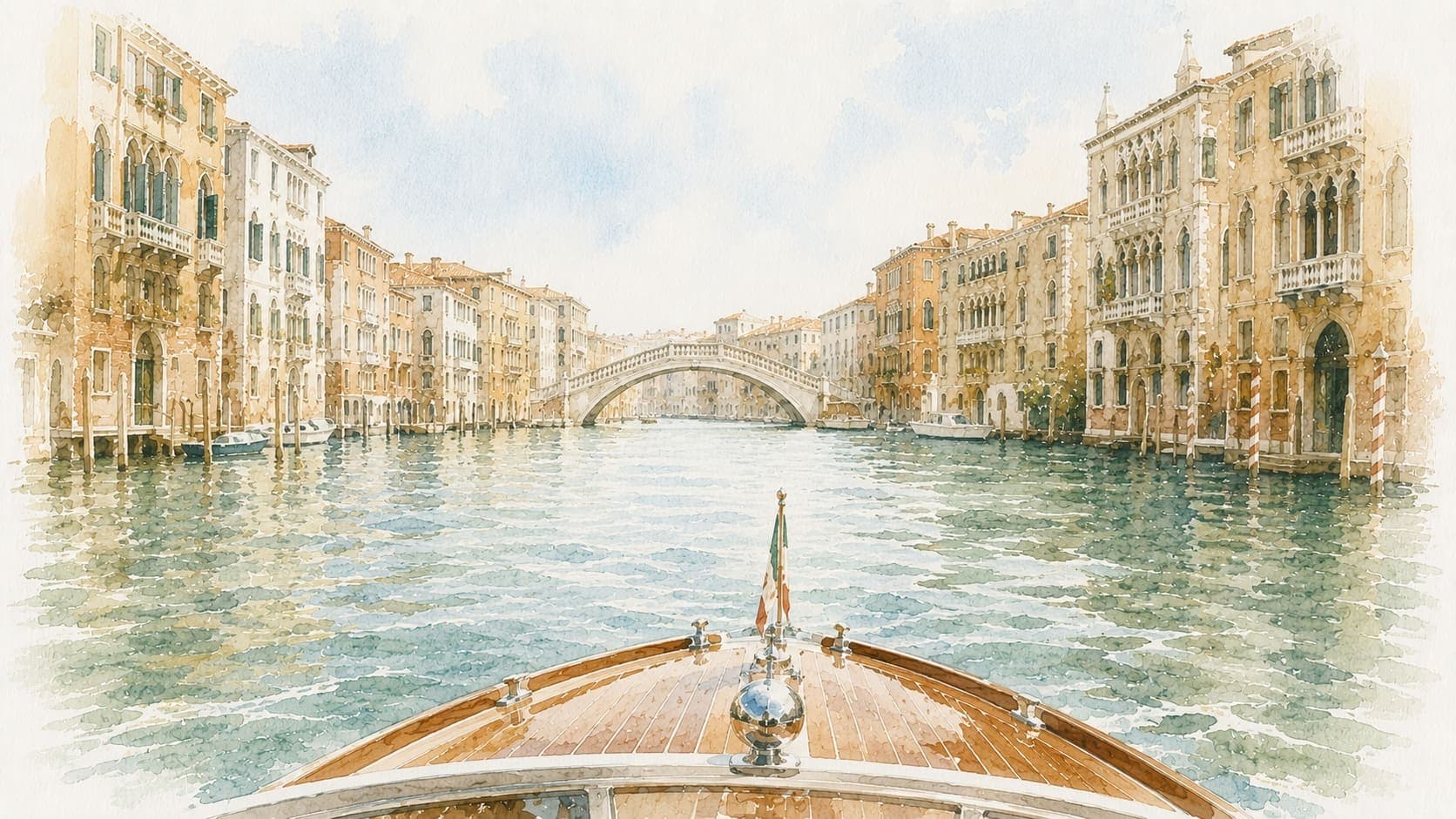
Around San Marco, polite touts approach visitors: a free tour of a glass factory, a comfortable boat, leaving now.
Nobody runs expensive launches for nothing. You are taken to a showroom that pays the tout a commission, walked through the workshop for five minutes and left in the shop, where the pressure begins. If you buy nothing, the return trip can turn out to be unavailable.
A trip to Murano should be a deliberate one: a private transfer, or a visit with someone who takes no percentage of what you buy.
Three marks of a fake
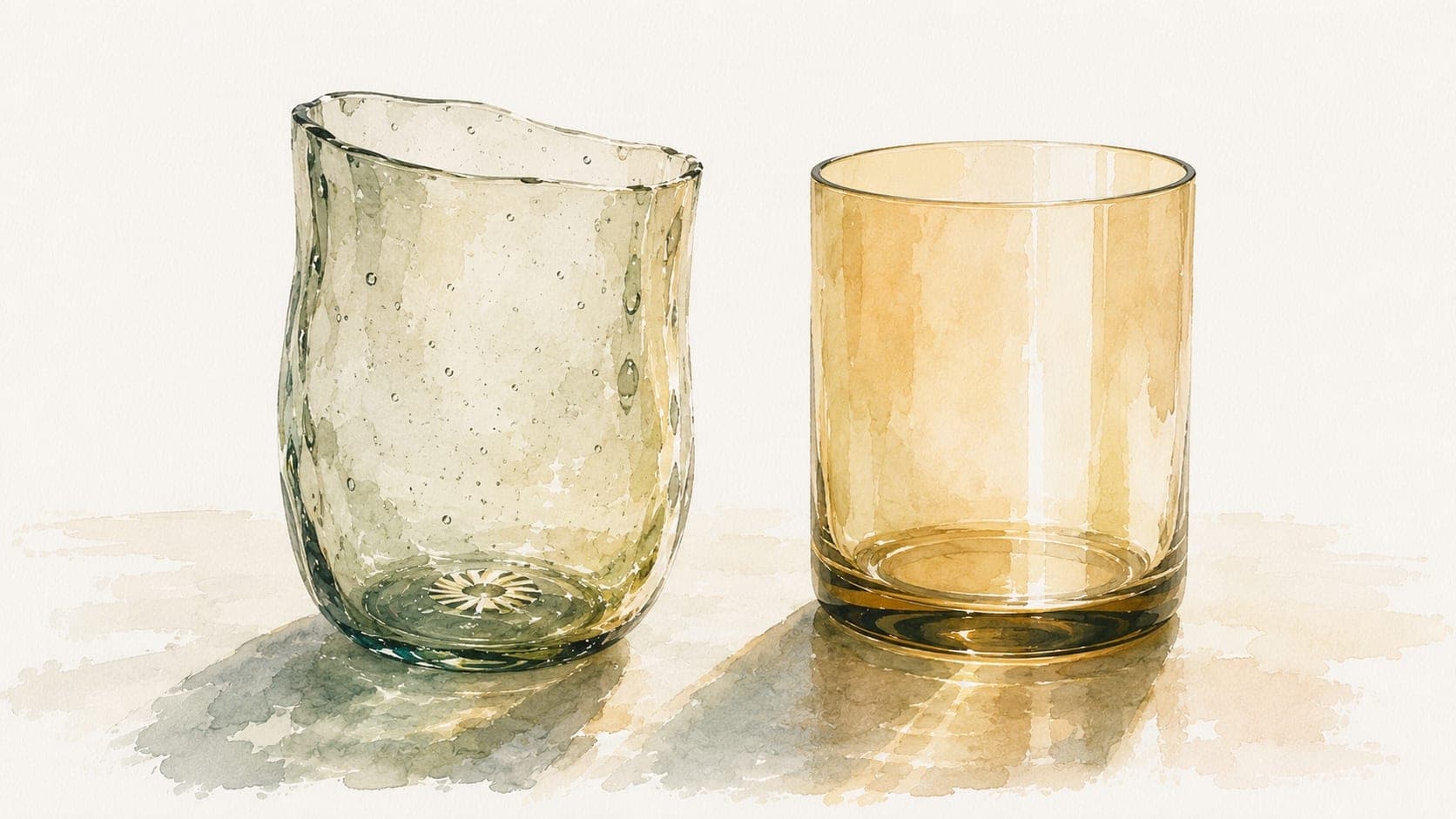
- Perfection
- Pressed glass is even, symmetrical and dead. Handwork carries minute bubbles inside, a slight asymmetry and a pontil scar on the base. Those flaws are the proof.
- The seal
- Look for the Vetro Artistico Murano consortium sticker. If the seller explains that the sticker came off but it is certainly genuine, leave.
- Weight and price
- Real glass is heavy: sand, soda and minerals for colour. A complex handmade vase cannot cost twenty euros — the maker’s time alone runs to hundreds.
The names people go by
If you are looking for an object rather than a souvenir, ignore the shops around Rialto and look at the dynasties.
- Venini
- Avant-garde design, with work in museum collections
- Barovier & Toso
- One of the oldest glassmaking families in the world
- Seguso
- Classicism, held steadily
The working furnaces of these houses are not open from the street. They are entered by arrangement.
How to go and not regret it
A trip to Murano is either the worst memory of a visit — crowds, pressure, imitations — or a genuinely extraordinary hour, watching fire turn into a fixed form. The difference lies entirely in who takes you.
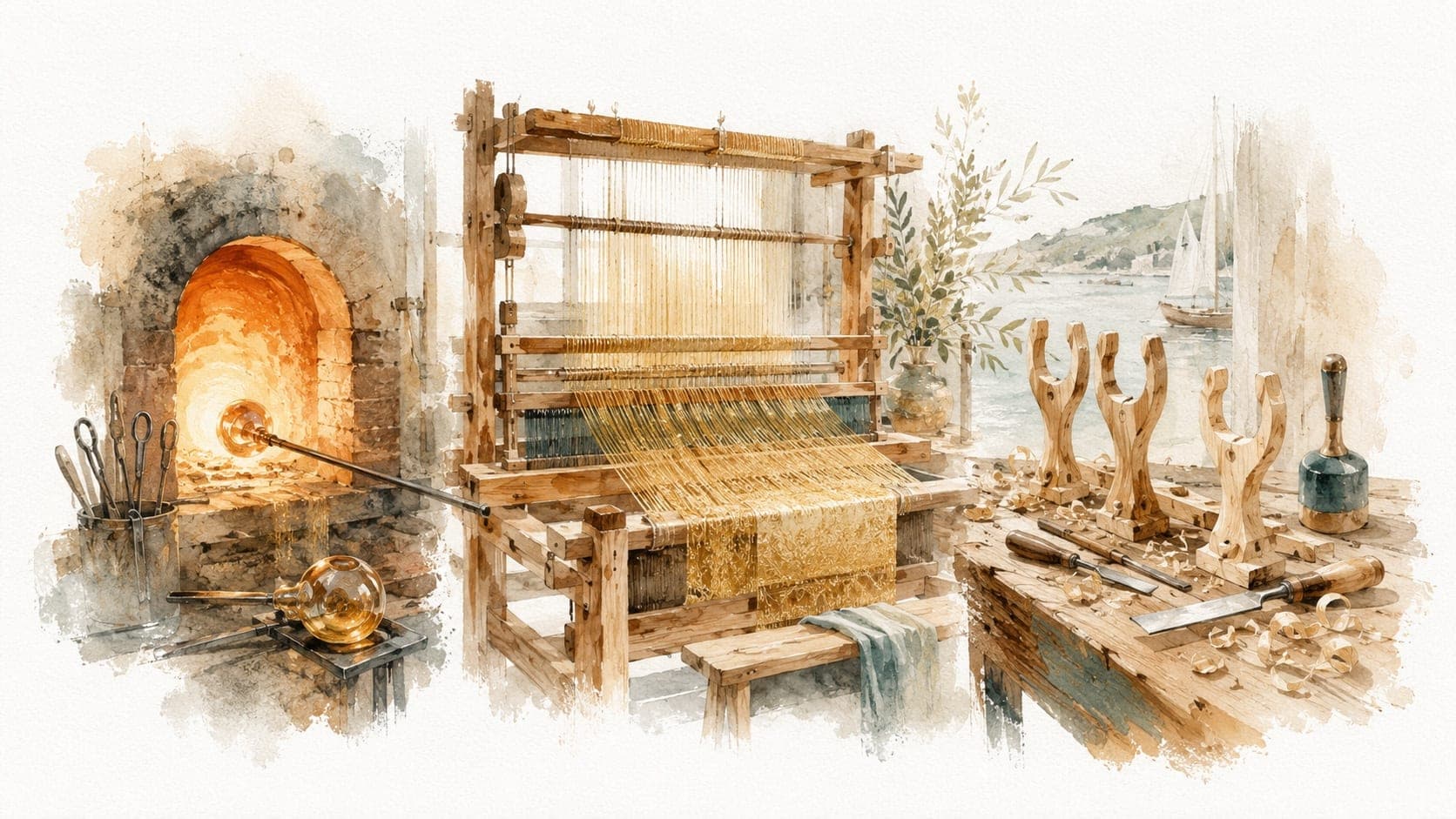
A private workshop visit means no groups, a maker working in front of you and answering questions, and a purchase, if you want one at all, made with a guarantee of authenticity and with shipping arranged.
Frequently asked
Why is Murano glass expensive?
Handwork, costly raw material with minerals for colour, and years of training. Furnaces are also never allowed to go out.
Can I take Murano glass out of Italy?
Yes, contemporary pieces leave freely. Restrictions apply only to antiques over fifty years old, which require a permit.
How do I check authenticity?
The Vetro Artistico Murano sticker with its code, the marks of handwork, and a plausible price. All three together, not one of them alone.
Is Murano worth visiting at all?
Yes, if you are going to watch someone work. No, if you are going for a souvenir — you will find the same thing in the city.
How long does the trip take?
Twenty minutes by boat to Murano. With Burano, half a day; with Torcello, a full one.