Venice in a Day: A Curator's Route, Without the Crush
"Venice in a day?" A Venetian will raise an eyebrow, and rightly so: a city of this density cannot be "done" in eight hours. But something else is possible — to see it in such a way that the day is remembered not for queues and jostling but for the light on the water and a place or two you'll want to return to. The difference between those two days is not speed. It's sequence.
Most one-day itineraries march you in a straight line: from the station to St Mark's, on to the Rialto and back to the train — at the very same hour, on the very same line, as the thirty thousand people around you. We'll go differently: against the current, outrunning the day's tide, leaving the monuments to the morning and the crowds behind. What follows is a curator's route for a single day, with honest 2026 prices, precise timing, and one thought worth holding from the outset.
Is Venice worth seeing in a single day?
Let's be honest, and let's not be snobbish about it: yes, it's worth it — but with your eyes open. In one day you can genuinely see the monumental heart of the city, walk it on foot, eat a real Venetian lunch and catch the sunset over the lagoon. What a day won't give you is the quiet Venice, the one that surfaces only once the day's visitors have ebbed away. And here lies the secret the guidebooks keep: the real Venice begins at around five in the afternoon.
It's a matter of arithmetic. Of the tens of millions who come to the city, the overwhelming majority are day-trippers: off the train or the cruise ship in the morning, gone by dinner. The crowd peaks between eleven and four, and concentrates precisely on St Mark's and the Rialto. And by six the station takes them back — and the alleys empty, the canals fall quiet, the light turns to gold. Whoever leaves at four has honestly seen Venice. Whoever stays until morning has seen it as it truly is.
So keep a simple fork in mind. If you really do have only one day, our route will wring the most from it. But if there is the slightest chance of staying the night — stay. We'll return to this at the end, and not only for romance: staying over now carries a financial advantage too.
What to sort before you arrive
Venice is very nearly the only major city in Italy where improvisation costs more than planning. Three things are worth settling in advance, from home.
The access fee. Since 2024 the city has charged day visitors an entry fee, and in 2026 it applies on 60 days — from 3 April to 26 July, mostly on Fridays, Saturdays, Sundays and holiday weeks, between 08:30 and 16:00. It costs €5 per person if you register four or more days ahead, and €10 if you leave it later. Children under 14 don't pay, but register all the same. It's all done online through the Venezia Unica portal, and you're issued a QR code that may be checked as you enter the historic centre. One crucial detail: the fee falls on day-trippers — those who stay the night in Venice (including in Mestre or on the Lido) are exempt, though they still need an exemption QR code. If your date falls within those 60 days, register early and at the cheaper rate.
A vaporetto ticket. In 2026 the public water bus costs €9.50 for a single ticket (valid 75 minutes) or €25 for a 24-hour pass with unlimited rides. For a one-day route through the historic centre, one or two singles will do — the city itself is compact and best walked, and you'll want the vaporetto mainly for the grand entrance along the Grand Canal and perhaps the journey back. If you're planning the islands or expect to ride a great deal, take the day pass; it pays for itself from the third ride. The ticket from the airport is not part of this system: that has its own transport — the Alilaguna boat (€18) or the bus to Piazzale Roma.
Two skip-the-line tickets. If your day includes the Doge's Palace and St Mark's Basilica — and they earn their place — buy timed-entry tickets in advance. In season the walk-up queue for the Basilica swallows an hour or more, whilst a booking waves you through with barely a wait. Note the Basilica's dress code too: covered shoulders and knees, and large bags aren't allowed inside.
With that settled at home, you'll arrive with a QR code, a ticket and your time slots — and the whole day is left for Venice itself, not for ticket desks.
Morning: the grand entrance along the Grand Canal, and St Mark's before the crowds
The temptation is strong — to step off the train and dive into the first alley. Resist it. Begin on the water.
From the Ferrovia stop by the station (or Piazzale Roma), board vaporetto line 1 and sail the length of the Grand Canal to St Mark's. It's the best €9.50 you'll spend in the city: forty slow minutes past the palazzi Canaletto painted from this very water, in the morning light and without the crush. Sit towards the stern, by the open rail — from there you'll see façades rather than the backs of heads.
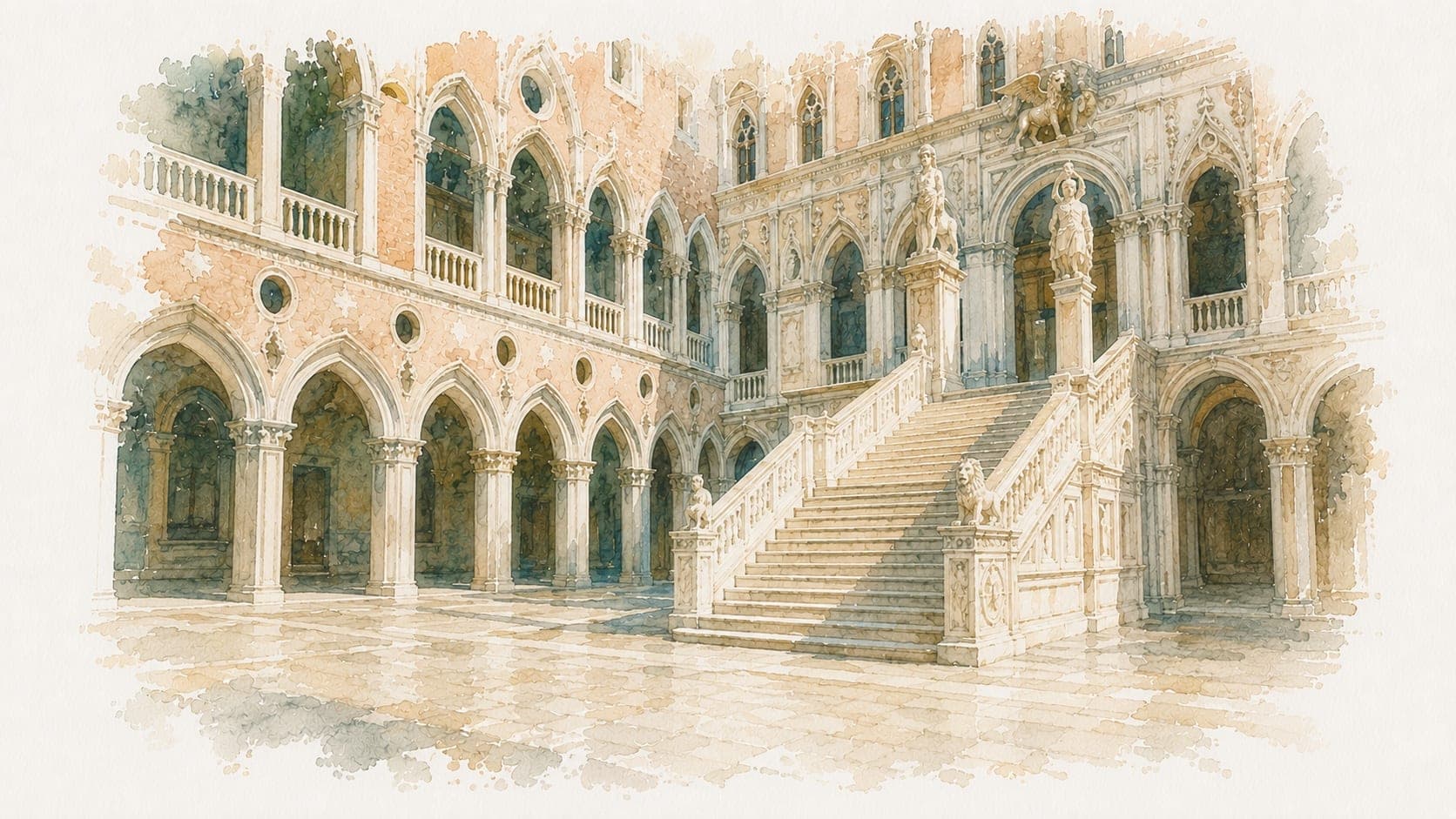
Get off at San Marco and step onto the square early, before the groups claim it — ideally by nine or ten. The early Piazza is worth rising for: empty, vast, with a basilica whose mosaics blaze gold in the morning sun. First, the Basilica on your booked slot — don't miss the upper loggia, with its bronze horses and the view down over the square. Then the Doge's Palace: the state rooms, Tintoretto's Paradise, the Bridge of Sighs; and if you can find a place on the Secret Itineraries, take it without hesitation — it's the finest way into the underside of Venetian power. Do the monuments in the morning, before the day's tide floods the square.
Midday: escape the square and eat properly
By noon St Mark's becomes a sea of people — and that's your cue to leave. Here the day-tripper makes the cardinal error: lunching where they stand, by the square, and collecting a bill with fish "by weight" and a surcharge for the view. Not you.
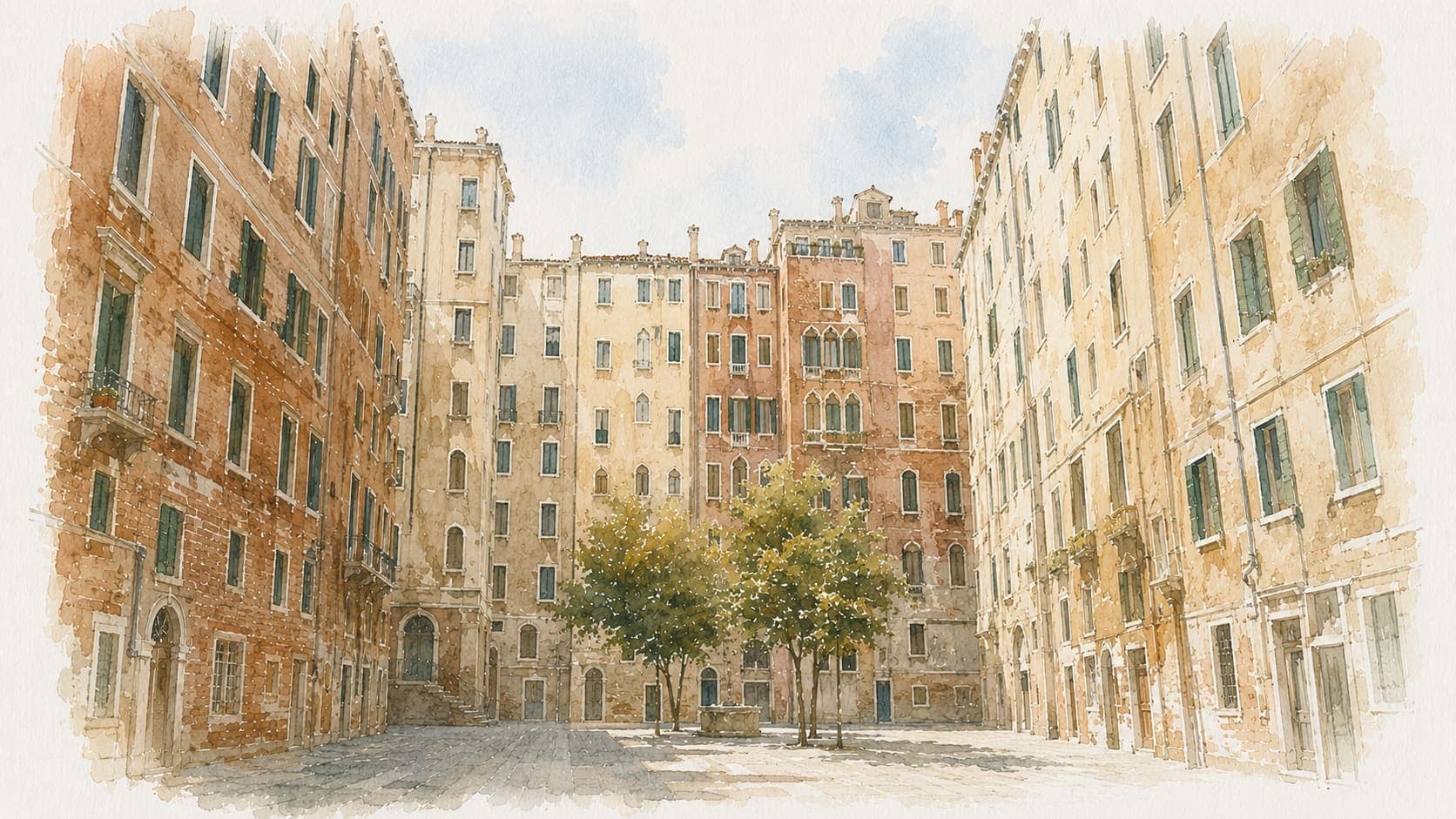
Leave the square behind — towards quiet Castello to the east, or across the bridges into Dorsoduro. There, a street or two in, residential Venice begins: washing strung over canals, children, shops. And there, too, is the real lunch. Look for a bàcaro, the local wine bar where a glass comes with cicchetti (Venetian one-bite morsels), or a modest osteria with an Italian-only menu and prices on show. Walking five minutes from St Mark's means doubling the quality of your food and halving the bill. How to tell the real thing from a trap we've covered separately, along with what you shouldn't overpay for.
Afternoon: Dorsoduro, the Accademia and the Rialto as the crowds thin
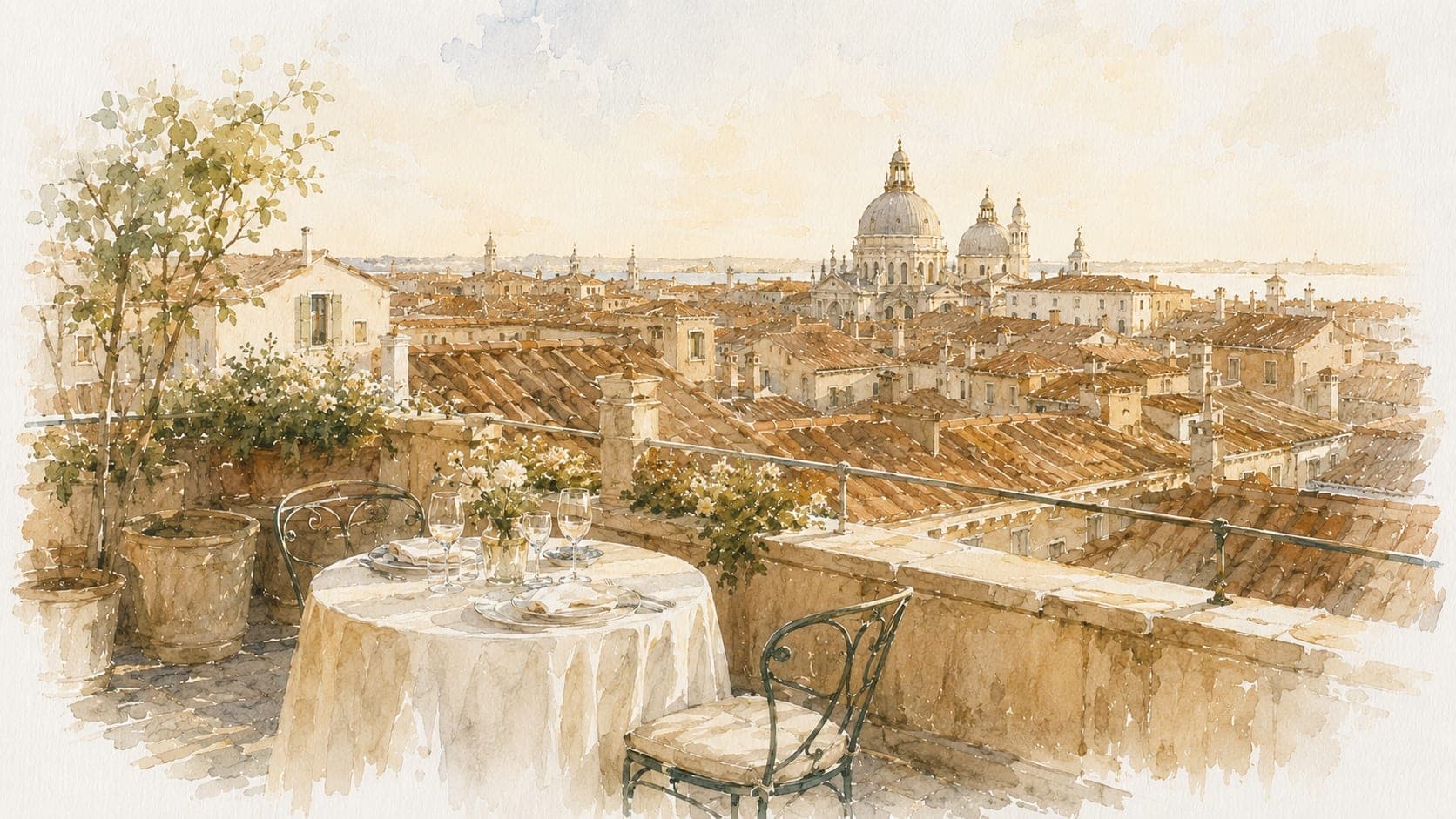
Give the afternoon to Dorsoduro, the calmest and most "artistic" of the sestieri. Here you have a fork to taste: the Accademia Gallery, with the finest collection of Venetian painting from Bellini to Tiepolo — or the Peggy Guggenheim Collection, if the 20th century is closer to your heart. No appetite for a museum? Simply walk to the church of Santa Maria della Salute at the mouth of the Grand Canal, and along the Zattere waterfront, where the water opens up and you can breathe.
And towards evening, return to the Rialto — but now, not at noon. By five, once the groups have ebbed, the bridge and the lanes around it become themselves again. Cross the Grand Canal by the bridge, or better, as the locals do, by traghetto — the ferry-gondola, for a couple of euros: a short crossing, taken standing, but without the crush and almost for nothing.
The golden hour and evening: what it's worth staying for
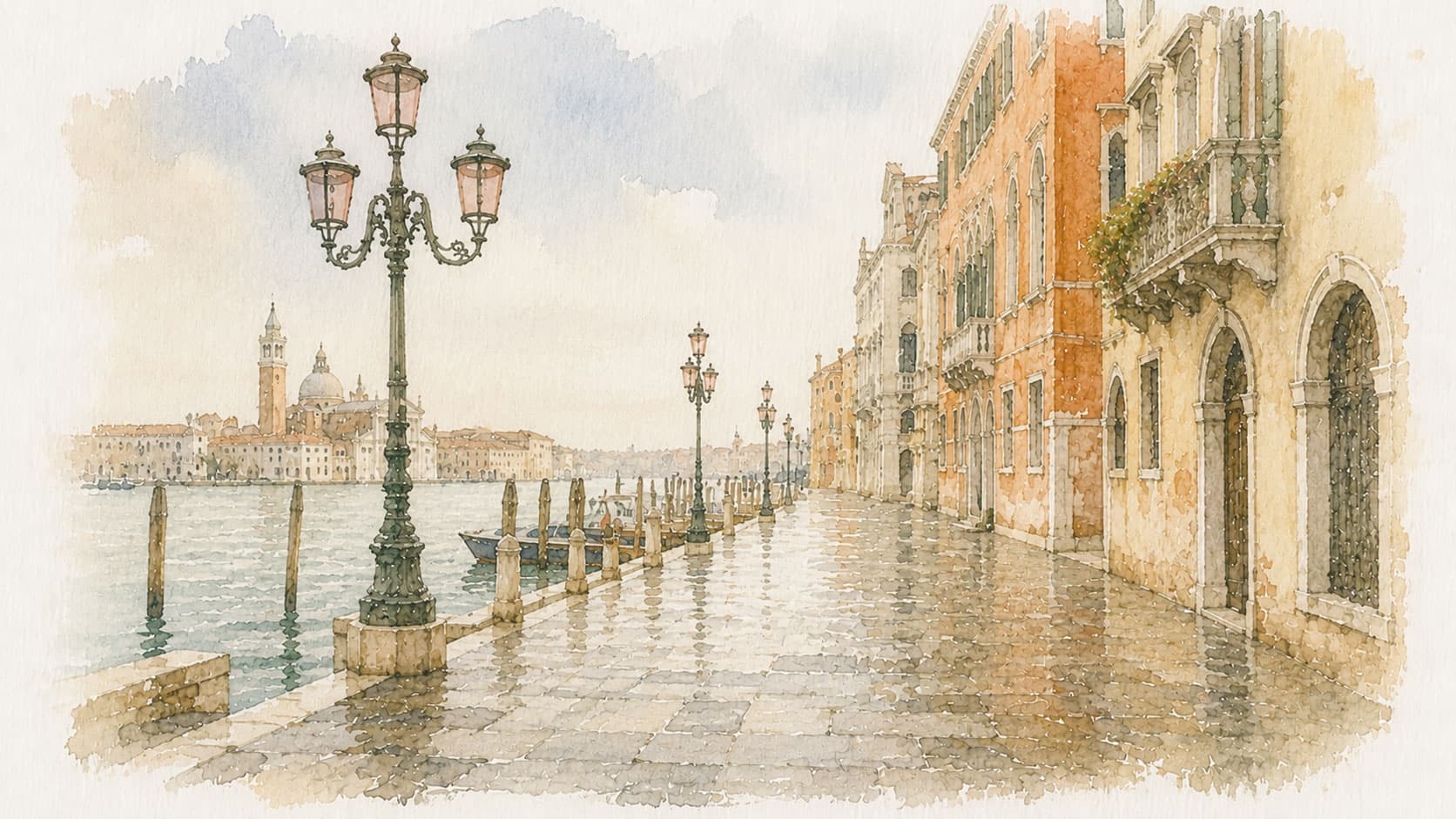
Now for what it was all leading to. After five the city changes before your eyes: the trains carry off the day's visitors, the squares empty, and the low sun lays on the water that very light the painters and photographers come for. This is Venice's finest hour, and it goes to those still here.
Spend it without a plan: a glass of spritz over a canal, a walk with no map through the quietening alleys, a sunset from a bridge or the deck of a vaporetto. And here the fork from the beginning returns. The day-tripper is, at just this moment, hurrying for the station — the QR code lapses at four, the train is already booked, and the city's best hour is spent travelling. Whoever stays the night paid no access fee and hurries nowhere: before them lies the evening city, quiet and all but empty, as only the locals and the few guests who chose to linger will ever know it. A day will show you the city. An evening will make you fall for it.
In brief
- Before you go
- check whether your date falls within the 60 access-fee days (€5 ahead / €10 later), get a vaporetto ticket (€9.50 single / €25 day pass), book slots for the Basilica and the Doge's Palace.
- Morning (09:00–12:00)
- Grand Canal on vaporetto 1 → St Mark's early → Basilica on your slot → Doge's Palace.
- Midday (12:00–14:00)
- leave the square for Castello or Dorsoduro → lunch in a bàcaro, well away from St Mark's.
- Afternoon (14:00–17:00)
- Dorsoduro — the Accademia or the Guggenheim, the Salute, the Zattere → the Rialto and the bridge as the crowds thin.
- Evening (17:00+)
- the golden hour, a spritz, a walk with no map — and, if you can, stay the night.
Frequently asked
Can you really see Venice in one day?
Yes — the monumental heart of the city (St Mark's, the Doge's Palace, the Grand Canal, the Rialto, one museum and a proper lunch) can genuinely be covered in a day, provided you move in the right order: the monuments in the morning, lunch away from the square, the Rialto as the crowds thin towards evening. What a day won't show you is the quiet evening Venice, for which it's worth staying the night.
How much does a day in Venice cost?
The basic costs of a day in 2026: an access fee of €5–10 (only on the 60 designated days), the vaporetto from €9.50, entry to the Doge's Palace and the paid parts of the Basilica, and lunch. Without extravagance a day comes to a reasonable sum; everything "on top" — a gondola, a private boat, dinner with a view — is a matter of taste and budget.
Do I have to pay to enter Venice?
Only if you're a day visitor arriving on one of the 60 fee days (3 April to 26 July 2026, mostly weekends, 08:30–16:00). Then it's €5 if you register four or more days ahead, or €10 later, with under-14s free. Those who stay the night in Venice don't pay, but still register for an exemption QR code.
Which vaporetto ticket should I get for one day?
For a route through the historic centre, one or two single tickets at €9.50 are usually enough — the city is walkable, and the vaporetto is mainly for the Grand Canal. If you plan to ride a lot or visit the islands, take the €25 day pass: it pays for itself from the third ride.
What should I prioritise with only half a day?
Favour the water and the square: the Grand Canal on vaporetto 1 and an early St Mark's with the Basilica. If your half-day is the later one, do it in reverse: Dorsoduro and the Zattere, and catch St Mark's and the Rialto on the evening ebb, in the golden light.
A day trip, or a night's stay?
If you have the choice — stay. A night's stay lifts the access fee, spares you the dash for the train, and grants the city's best hour: the evening, once the day's visitors have gone. A day shows you Venice; a night reveals it.
A day in Venice is not a checklist but a question of rhythm. Take it in the right order, against the day's tide, and even eight hours are enough for the city to open up. But if our route persuades you of anything, let it be this: Venice rewards not haste but attention — and most generously those who linger into the evening. If you're planning a day or two in the city, tell us your dates and we'll build a route to your rhythm and your interests, with the monuments booked and lunch where the locals eat. And to keep in hand a map of places with substance rather than signage, take our curated map of Venice with you.