Venice Carnival 2027: Dates, Masked Balls and How to See the Real One
Venice Carnival 2027 runs from 23 January to 9 February. Two weeks the city is booked out for six months ahead: masks, costumes, balls in the palazzi, and Venice turned into a theatre. What follows is everything practical — the exact dates, how the main events work, how the balls differ and what they cost, how to see the real thing without the crush on San Marco — and which of it we take off your hands.
Dates for Carnival 2027
Venice Carnival 2027 runs from Saturday 23 January to Tuesday 9 February. Two anchor days inside it: Fat Thursday (Giovedì Grasso) on 4 February, and Shrove Tuesday (Martedì Grasso) on 9 February. Shrove Tuesday always closes the Carnival — the next day, Ash Wednesday, begins Lent.
The dates move each year because they're tied to Easter: Carnival ends the day before Lent begins. Easter 2027 falls early (28 March), so Carnival is early too, closing on 9 February. That end date is firm. The full day-by-day programme for 2027, however, isn't out yet at the time of writing. The city usually publishes it in December–January: the year's theme, and the exact dates of the Flight of the Angel, the Festival of the Marie, the water parade and the mask contest. The moment the official calendar appears, we'll update this page. Below we describe not invented 2027 slots but how the Carnival works every year — so you can plan now.
A quick steer for choosing your dates:
- The first weekend (around 23–24 January)
- the opening on the water; more atmospheric and calmer than the peak.
- The central weekends and the final week (from Fat Thursday, 4 February, to Shrove Tuesday, 9 February)
- the peak: costumes, balls, the mask contest, and the densest crowds on San Marco.
- Weekdays in between
- an underrated window: costumes are still about town, with noticeably fewer people.
What the Venice Carnival actually is
The key thing to grasp before you come: the Venice Carnival has no single parade and no one "main stage" that everything files past. The spectacle is scattered across the whole city and runs every day — on the squares, the bridges, in the alleys and on the water. There's no "Carnival ticket": the street is free, and you pay only for the balls, the dinner-shows and a few workshops.
A costume is an option, not an obligation. Thousands come in ordinary clothes and have a wonderful time; if you'd like, a mask and cloak can be hired from an atelier for the day. The word carnevale comes from the Latin carne vale, "farewell to meat" — the last feast before the Lenten fast, which is where it began.
Venice is the ideal stage for it: a city with no cars, where there's a ready-made set around every corner. That's why the Carnival here isn't an attraction bolted on — it's the city itself, continued.
The main events
Year to year, the Carnival rests on a handful of big set-pieces. The exact 2027 dates come with the official programme; here's what each one is, so you can time your day to it.
- Festa Veneziana sull'acqua — the water parade
- Opens the Carnival on the first weekend: illuminated boats with costumed rowers move down the Cannaregio Canal and onto the Grand Canal. The most atmospheric start, and markedly calmer than the central days.
- Volo dell'Angelo — the Flight of the Angel
- The opening ceremony on Piazza San Marco: a costumed "angel" descends on a cable from the Campanile to the crowd. The tradition echoes a 16th-century acrobatic feat and was revived in its present form in 2001. One of the most crowded moments — come early.
- Festa delle Marie — the Festival of the Marie
- A procession of twelve young women in historical dress, recalling a medieval tale of Venetian brides carried off by pirates. The procession makes its way to San Marco, where the "Maria of the year" is chosen — and she becomes the next Carnival's "angel".
- Volo dell'Aquila — the Flight of the Eagle
- A reprise of the "flight" on the final weekend, often with a well-known guest.
- Svolo del Leon — the Flight of the Lion
- The closing on Shrove Tuesday: a vast banner of the Lion of St Mark is raised over Piazza San Marco — the Carnival's symbolic finale.
- La Maschera più Bella — the most beautiful costume contest
- For several days running, costumes take the stage on San Marco before a jury (often international designers), with the final nearer the close.
Keep in mind, too, Campo San Polo — a big family venue with a children's programme — and the islands (Burano, for one), which hold their own celebrations away from the main crowd these days.
Masks and costumes
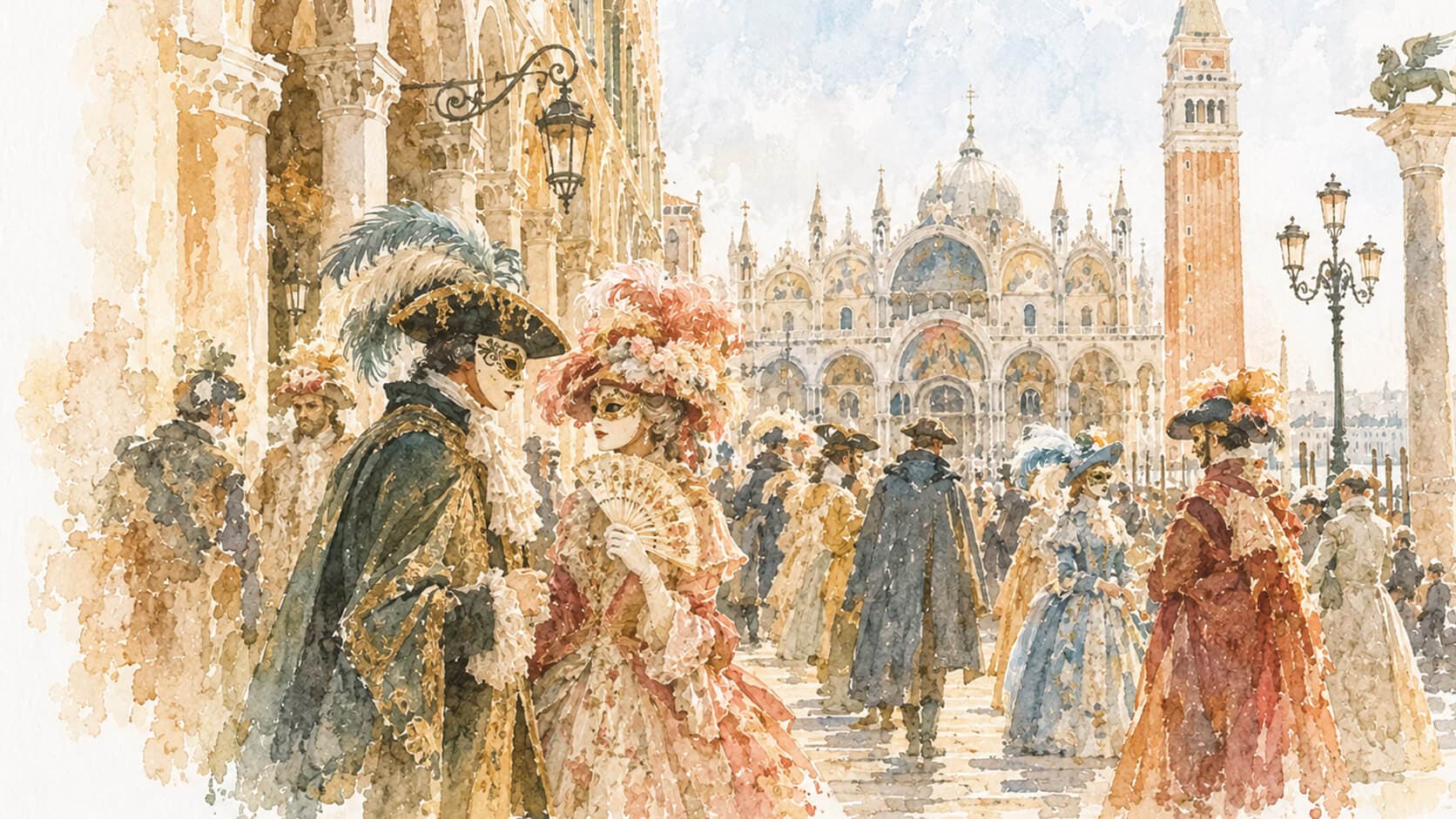
The Venetian mask isn't a kiosk souvenir but a craft with a history. The classic types you'll see on the best costumes:
- Bauta
- a white mask with a jutting "beak" and no mouth, worn with a black cloak (tabarro) and a tricorn. The mouthless shape let the wearer eat, drink and speak while staying unrecognised — the most Venetian of masks.
- Volto, or larva
- the classic full-face white mask.
- Moretta
- a small oval of black velvet a lady held in place by biting a button; hence its other name, the "mute servant".
- Colombina
- an elegant half-mask over the eyes, trimmed with gold, stones and feathers; it comes from the commedia dell'arte.
- Medico della peste — the plague doctor
- the long-beaked mask, once a physician's protective gear, now one of the Carnival's most recognisable figures.
Real masks are made in artisan ateliers — Ca' del Sol, Ca' Macana, Atelier Marega, La Gioia and a handful of others, where a mask is moulded and painted by hand. A full ball costume is hired from specialist ateliers (Atelier Nicolao, for one). Where to find a genuine mask and avoid a stamped-out souvenir we'll show you in person — it's part of our Venetian workshops route.
The balls and private dinners
The most exclusive — and most lavish — part of Carnival is the balls in the palazzi. These are ticketed evenings in historic interiors: costume and mask are mandatory, with dinner, baroque music and a show. The range in level and price is wide, so choosing the right one matters.
- Il Ballo del Doge
- the most famous and the dearest. Antonia Sautter's gala at the Scuola Grande della Misericordia: couture costumes, opera voices, acrobats, a multi-course dinner. Prices run from a few thousand euros a seat up into five figures for the best tables.
- Ballo Tiepolo
- an 18th-century-style ball at Palazzo Pisani Moretta on the Grand Canal: hundreds of candles, frescoes, Vivaldi. A rough guide: around €600–1,500 a seat.
- Carnival Official Dinner Show
- the official dinner-show at Ca' Vendramin Calergi (the casino palazzo on the Grand Canal) on selected Carnival evenings. A guide price of about €650 per person.
- There are other formats too
- from more intimate palazzo balls to a large official gala with a buffet for several thousand guests, which is the most affordable of the lot.
Two things to know in advance. First, the best evenings go months ahead — sales often open as early as the autumn. Second, most balls require a real costume, not merely "something smart" — a task in itself, best not left to the last day. We confirm current 2027 prices and availability on enquiry and match the ball to your taste and budget — more on that below.
How to see the Carnival without the crowds
Honestly: Piazza San Marco on the central weekends is a dense, slow crowd. The good news is that the real Carnival is easy to see another way.
- Come early in the morning
- The best costume photographs are at first light by San Marco and on the bridges, while the city is all but empty. By midday it's shoulder to shoulder.
- Step off the main axis
- In Castello, Dorsoduro and the depths of Cannaregio you'll find costumes and no crowd. The Carnival there is quieter and more human.
- Watch the set-pieces from the water, or a secured spot
- The opening on the water and the parades are far better seen from a reserved place — aboard a boat or from a canal-side terrace — than from the crush.
If Carnival is your reason for a first visit to Venice, our one-day route through the city helps too — it's about sequence, not speed.
What we organise for you
Carnival turns easily into a muddle of queues, overpaying and "a smart jacket" in place of a costume. We take that part off your hands — from a single detail to the whole Carnival, end to end.
- Balls and parties
- We choose and book the ball that fits your taste and budget — from the official dinner-show to the most exclusive galas — or organise a private Carnival party from first to last: the palazzo venue, the catering, the music, the programme.
- Private dinners
- Dinner in a private palazzo, or a table at the right restaurant on nights when the right tables are gone weeks ahead.
- Costumes and masks
- We arrange the hire of a genuine period costume and choose a mask at an artisan atelier — so you clear a ball's dress code rather than hunting for a costume the night before.
- A costumed photoshoot
- A shoot in costume at first light — in an empty Venice, on a bridge, or aboard a boat.
- Arriving at the ball by water
- You can reach a palazzo the way its owners did — by private launch, in costume. It's an atmosphere of its own; the options are in our lagoon-boats section.
- A guide who shows you the real Carnival
- The history, the quiet quarters, the workshops, the best vantage points for the Flight of the Angel without the crush — a private guide on request, and the full day handled end to end.
The idea is simple: you give us the dates and what you want from Carnival; we assemble the rest — the hotel in the right spot, the costumes, the ball tickets, the boat, the dinner, the photographer, the guide — in a single conversation.
A little history: from 1162 to the ban and the revival
The Carnival is traditionally dated to 1162 — to a celebration in Piazza San Marco after a military victory by the Republic. As a grand affair it flowered by the 17th and 18th centuries: masks were worn for weeks, and beneath them the ranks dissolved — patrician and servant became, for a while, simply "masks". This was the Venice of Casanova and the gaming Ridotto, Carnival as a way of life rather than a fortnight a year.
It all ended in 1797, when Napoleon brought down the thousand-year Republic and the new regime effectively banned the Carnival and its masks. For almost two centuries the tradition lay dormant. The modern Carnival was reborn in 1979, when the city revived the festival to bring life back to winter Venice and to revive the craft of the mask. Today's Carnival is that revival, grown into one of the world's great costumed festivals.
Frequently asked
When is Venice Carnival in 2027?
From 23 January to 9 February 2027. Fat Thursday is 4 February; Shrove Tuesday (the finale) is 9 February.
Why do the dates change every year?
Carnival is tied to Easter and ends the day before Lent begins (Ash Wednesday). Easter 2027 is early, so Carnival is early.
How much does it cost to go to Carnival?
The street itself is free — costumes and the events on the squares and the water can be seen without a ticket. Only the balls, dinner-shows and some workshops are paid.
Do I need a costume?
No, not to be at the Carnival. Many hire a mask and cloak for the day. But the palazzo balls require a real costume under their dress code.
What happens at Carnival — what are the main events?
The water parade at the opening (Festa Veneziana), the Flight of the Angel and the Flight of the Eagle on San Marco, the Festival of the Marie, the most-beautiful-costume contest, and the Flight of the Lion at the close on Shrove Tuesday. The exact 2027 dates come with the official programme.
How much do the balls cost?
It varies. The official dinner-show is roughly from €650 per person; an 18th-century-style ball about €600–1,500; the most famous, Il Ballo del Doge, from a few thousand up into five figures for the best seats. We confirm current prices and availability at booking.
How do I get into a ball?
The best balls sell out months ahead, sales often open in the autumn, and most require a real costume. We match the ball to your budget, book the seats and arrange the costume.
Where are the fewest crowds?
Early morning by San Marco (best light, almost empty), in Castello and Dorsoduro, deep in Cannaregio, and on the islands. The main crush is on San Marco on the central weekends in the daytime.
What's the weather like then?
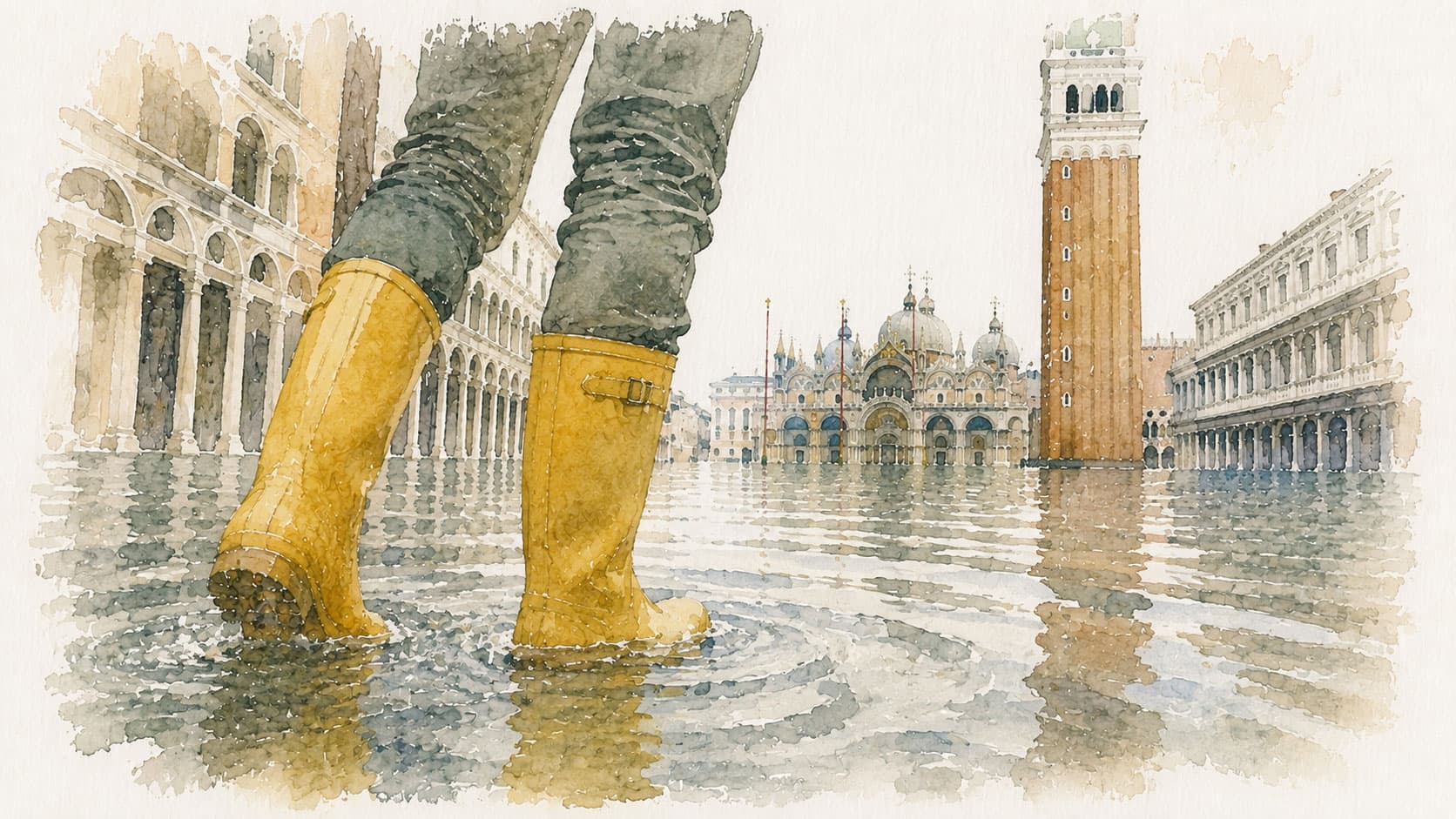
Cold and damp, with high water possible. You'll want warm layers and waterproof footwear.
Are there tours and a guide in English?
Yes. Russian and Italian are fluent; English is available on advance request, so the guide can prepare.
Can you arrange the whole Carnival — costumes, a ball and dinner?
Yes. We assemble the whole trip — the hotel in the right spot, costumes and masks, ball tickets, a private boat, dinner and a photoshoot — around your dates.
Carnival rewards those who've prepared: who have the costume, the booking for the right evening, and someone who knows where the real festival is and where the crowd is. There isn't long until 23 January, and the best balls and hotels go first — write to us and we'll build your Carnival around your dates and your taste.
Tours on this subject
8 hours · from €2000
A full private day in Venice, arranged end to end
2 hours · On request
A visit to a private palazzo in Venice
1 or 2 hours · from €500
Grand Canal tour by private boat
2 hours · from €300
Doge’s Palace tour with skip-the-line entry
1.5 hours · On request
St Mark’s Basilica after hours: a private visit
4 or 7 hours · from €1010
Murano, Burano and Torcello by private boat